
West Ham 0-1 Arsenal: Disallowed stoppage-time equaliser sparks major VAR debate
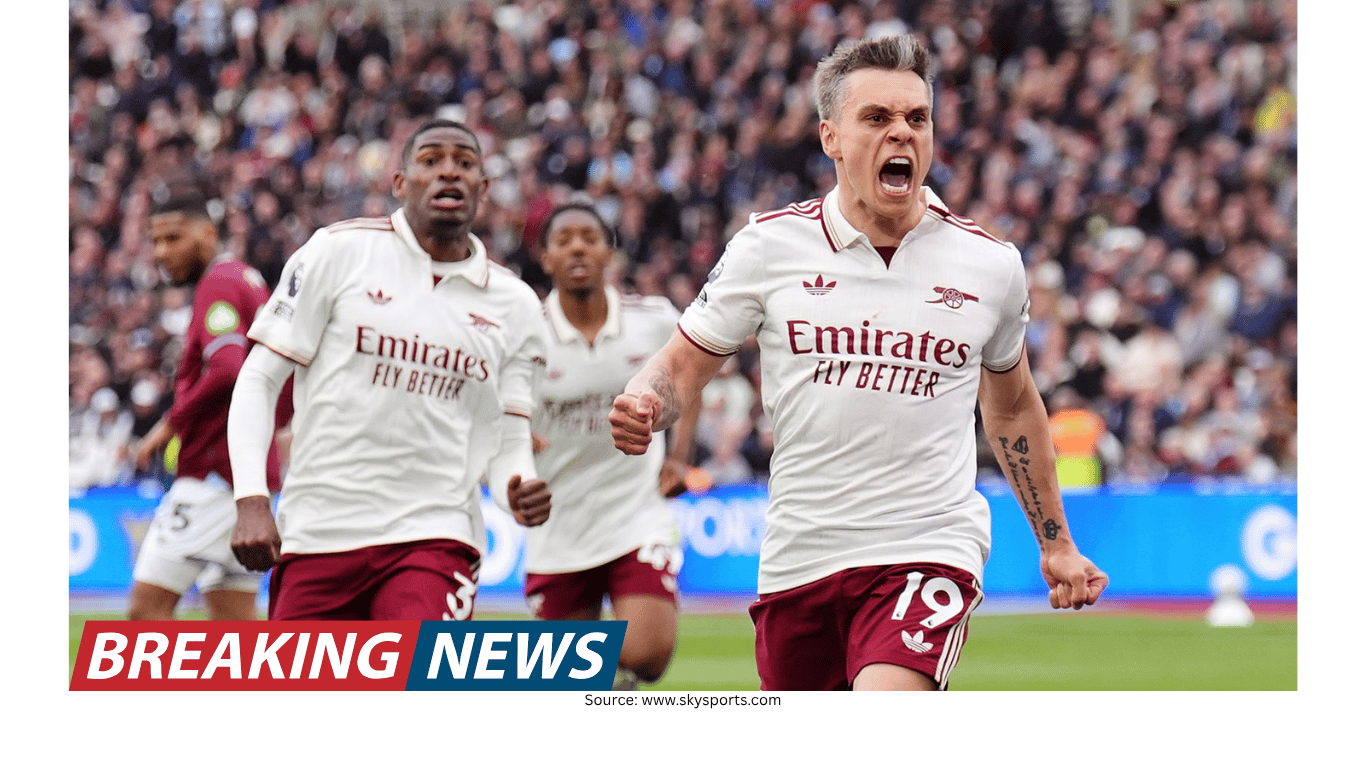
A 1-0 game decided by a late VAR intervention
West Ham’s meeting with Arsenal at the London Stadium ended with the visitors winning 1-0, but the defining sequence came deep into stoppage time. In the 95th minute, West Ham appeared to have rescued a point when Callum Wilson struck a dramatic equaliser. The on-field referee, Chris Kavanagh, awarded the goal after the ball crossed the line despite Declan Rice’s attempt to prevent it.
What followed was an extended review that ultimately changed the result. VAR official Darren England advised Kavanagh to use the pitchside monitor to reassess the incident. After a lengthy process—17 replays and four minutes and 17 seconds of stoppage—the goal was disallowed. The decision hinged on a foul in the build-up, with Kavanagh ruling that West Ham’s Pablo had committed an infringement on Arsenal goalkeeper David Raya.
The moment immediately became the central talking point of the match, not only because it came so late, but because of the wider implications attached to the points at stake.
Gary Neville: ‘The biggest moment in VAR history’
Gary Neville described the decision to disallow the equaliser as the “biggest moment in VAR history” in the Premier League. Speaking during commentary, he framed it as a potentially title-shaping intervention, given Arsenal’s position as a Premier League title hopeful.
“This is an earthquake, a tremor of a moment,” Neville said. He added that Arsenal’s pursuit of a first league title in 22 years could be influenced by such a decision, calling it one of those moments that can make a team feel “their name is on the trophy.”
Neville also highlighted the pressure on England, noting that the VAR official is also set to referee the FA Cup final at Wembley. In Neville’s view, the intensity of the London Stadium decision represented an extraordinary test of nerve and judgement.
How the review unfolded
The sequence began with Wilson’s late finish and the immediate on-field award of the goal. While the ball crossing the line was not ultimately the reason for the disallowance, it formed part of the initial uncertainty around the incident. Neville later said that, in real time, he wondered whether the ball had fully crossed, before it became clear that it had and that Rice was “way behind the line.”
Attention then shifted to whether there had been a foul on Raya. The VAR review focused on contact involving Pablo and the goalkeeper. After being sent to the monitor, Kavanagh reviewed multiple angles before deciding the goalkeeper had been impeded, leading to the equaliser being chalked off.
Neville later explained that he was watching to see whether England would have the “courage” to recommend an on-field review in such a high-stakes moment. He said he was impressed by the way England “walked through it,” communicating with the referee and colleagues while checking the incident carefully.
Pundit reaction: agreement on the foul, debate on the wider issue
While the moment was dramatic, several pundits agreed with the final outcome. Roy Keane argued that players must anticipate close scrutiny in the VAR era, particularly in crowded penalty-area situations involving goalkeepers.
Keane’s view was that West Ham made an avoidable mistake: “VAR are going to check everything,” he said, adding that players should not “put your hands on the goalkeeper,” and “certainly don’t leave it on for three or four seconds.” In his assessment, because Raya was directly affected, the incident met the threshold for a foul. He described it as “really silly” from West Ham, suggesting the contact made it an “obvious” situation for VAR to examine.
Jamie Redknapp also supported the decision, calling it “a brave VAR call” but “the right one.” Former Arsenal and West Ham striker Ian Wright echoed that stance, saying it was “without doubt” the correct decision and arguing that Raya would have caught the ball cleanly if he had not been impeded.
- Roy Keane: avoid contact that invites VAR scrutiny, especially on the goalkeeper
- Jamie Redknapp: brave call, correct outcome
- Ian Wright: clear foul; Raya likely catches the ball without the impediment
Neville’s detailed assessment of the officials
Beyond calling it a landmark VAR moment, Neville offered a more detailed analysis on his podcast. He said that, from a viewer’s perspective, there is a “luxury” in being able to follow the process more closely than those inside the stadium. He suggested that if supporters could hear the officials’ communication, it might help them understand how decisions are reached.
In Neville’s telling, England checked “everything around it,” and he referenced additional contact in the area, including what he described as “a little foul by Rice behind,” while maintaining that the key element was Pablo’s prolonged arm across Raya. Neville said Pablo was not looking to play the ball and appeared instead to be focused on impeding the goalkeeper.
He drew a distinction between normal movement during a challenge and contact that is sustained. If it had been “just one of those where you’re just going up as a movement,” Neville suggested it might have been overlooked. But he argued that the “prolonged lasting arm across Raya” made it something officials “have to” penalise.
His conclusion was that England made the right decision and that Arsenal “breathe the biggest sigh of relief” their fans have experienced “for a long, long time.”
What it meant for Arsenal’s title push
The decision carried clear consequences at the top of the table. With the goal disallowed, Arsenal preserved the 1-0 win and kept their fate in their own hands. The result left them two wins away from clinching the Premier League title.
Neville’s commentary captured the sense that such moments can become defining reference points in a title race—particularly when they arrive at the very end of a match and reverse what appeared to be a decisive swing in the scoreline.
What it meant for West Ham at the bottom end
The ramifications were also significant for West Ham. The defeat was their 18th loss of the campaign, and the outcome ensured the safety of both Nottingham Forest and Leeds. As described, West Ham’s only remaining hope of avoiding relegation now rests on Tottenham falling into the relegation zone in their place.
Tottenham were noted as being one point ahead of West Ham, with a match against Leeds scheduled for Monday Night Football. In that context, the disallowed equaliser was not simply a lost point; it was a moment that tightened the margins in a high-pressure fight at the bottom of the table.
West Ham’s view: frustration and questions about consistency
After the match, West Ham manager Nuno Espirito Santo spoke about the disappointment in the manner of the ending. He said the team were “all upset” given “the circumstances and the way it finished.”
Nuno also pointed to uncertainty around how similar incidents are judged, suggesting that decisions have gone differently in the past. He said that across recent seasons, similar situations have occurred and that “even the referees don’t know what is a foul and what is not a foul,” which, in his view, “creates doubt.”
Despite the controversy, he also urged a broader view of the performance, saying West Ham “made a very good match” against “a tough team,” while acknowledging the simple outcome: “We lost the game.”
West Ham captain Jarrod Bowen focused his comments on the way goalkeepers are officiated. He argued that goalkeepers receive more protection than outfield players and questioned how consistently officials apply their standards in the penalty area.
Bowen suggested that holding is common in the box and asked whether officials would check those actions “every time” and award penalties if that is the standard being applied. He added that while “you can’t wipe a goalkeeper out,” a keeper coming to claim the ball “has to expect contact,” describing the Premier League as a physical competition.
He also expressed a wider concern about the nature of long reviews, saying: “I just think if you look at something long enough, you will find something to give.” Bowen’s closing point was a question about clarity: “Where is the line and where is the bar?”
Arsenal’s view: praise for the officials’ ‘courage and bravery’
Arsenal manager Mikel Arteta described the match as a “rollercoaster of emotions” and said it was a day he would “certainly remember.” He acknowledged the stakes for both teams, noting that West Ham were “fighting for their lives” while Arsenal were “trying to win the Premier League.”
Arteta took the unusual step of publicly congratulating the referees for their handling of the incident. He said that while he has been critical when he felt it was warranted, on this occasion he wanted to recognise what he saw as a difficult and decisive intervention.
He said: “You need a lot of courage and bravery to stand out and give the opportunity to the referee to have a look at the action.” In Arteta’s view, once the replay was seen, “there is no question that it is a clear foul.”
A match that reignites the broader VAR conversation
The disallowed goal encapsulated many of the tensions that continue to surround VAR: the balance between correcting errors and disrupting the flow of a match; the challenge of consistency; and the heightened scrutiny on decisions involving goalkeepers in crowded penalty areas.
In this case, the debate did not revolve solely around whether VAR should intervene, but around the threshold for a foul and the time taken to reach a conclusion. The review involved 17 replays and added more than four minutes of stoppage time, underlining how one late incident can dominate the narrative and reshape the emotional arc of a game.
Yet the responses from pundits and Arsenal’s manager also show another side of the discussion: the argument that, when the evidence supports a clear infringement, officials should be willing to make an unpopular call—even in the final seconds of a match with major consequences.
Key points from West Ham 0-1 Arsenal
- West Ham’s 95th-minute equaliser by Callum Wilson was initially awarded on the pitch.
- After a lengthy VAR review, referee Chris Kavanagh disallowed the goal for a foul by Pablo on goalkeeper David Raya.
- Gary Neville called it the “biggest moment in VAR history,” citing the potential impact on the title race.
- Roy Keane, Jamie Redknapp and Ian Wright agreed with the decision, describing it as correct.
- West Ham’s manager and captain voiced frustration and raised questions about consistency and goalkeeper protection.
- Mikel Arteta praised the officials for their “courage and bravery,” calling the foul clear on review.
For Arsenal, the decision preserved a crucial win and kept the title challenge in their control. For West Ham, it was a painful late reversal in a season defined by fine margins—one that will be discussed not only for its immediate impact, but for what it says about the continuing evolution of VAR in the Premier League.