
Brunson ignites late rally as Knicks erase 22-point fourth-quarter deficit to beat Cavaliers in overtime
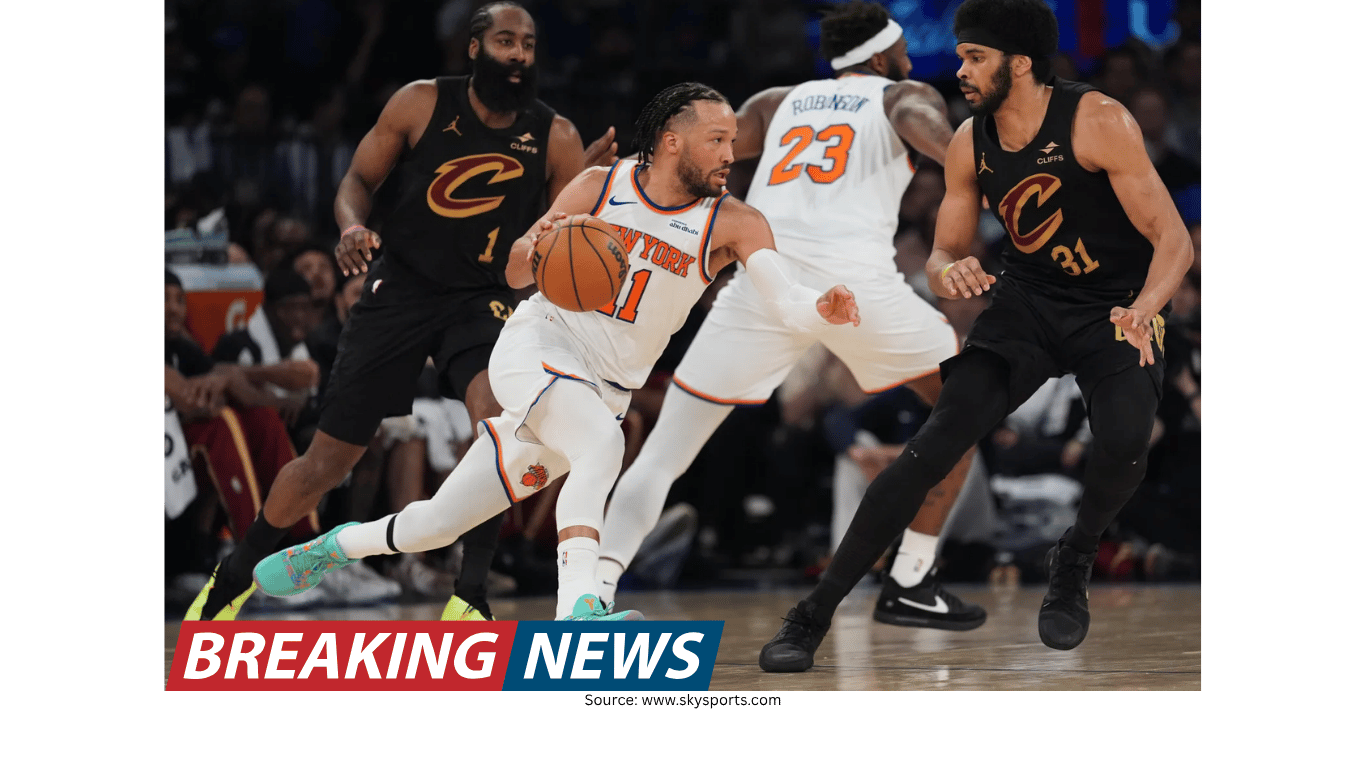
A comeback that turned Game 1 on its head
The New York Knicks opened the Eastern Conference finals with a result that felt improbable even by postseason standards, rallying from 22 points down in the fourth quarter to defeat the Cleveland Cavaliers in overtime at Madison Square Garden. The swing was dramatic: Cleveland held a commanding 93-71 lead with under eight minutes remaining in regulation, only for New York to storm back behind Jalen Brunson and seize control late.
Brunson, the engine of the Knicks’ offense during the comeback, finished with 38 points. His burst of attacking drives and late-game shotmaking helped transform what looked like a comfortable Cavaliers road win into one of the NBA’s most memorable postseason rallies.
For three quarters, Cleveland appeared in control. For the final stretch, the game belonged to New York. The Knicks’ surge culminated in a regulation finish that saw them close on an 18-1 run, wiping out the deficit possession by possession and turning the building into a scene of disbelief and noise.
How the Knicks climbed out of a 22-point hole
The Knicks’ deficit was stark: down 22 in the fourth, with time quickly disappearing. Yet the comeback did not arrive through a single miracle sequence. It came through repeated pressure at the rim, stops that fueled transition opportunities, and a growing sense that the Cavaliers were tightening up as the lead shrank.
Brunson’s approach in the closing minutes was simple and relentless. He attacked the basket, forced the defense to react, and kept the Knicks moving forward rather than hunting for a quick fix. His own description of the mindset reflected the incremental nature of the rally.
“Just keep fighting,” Brunson said. “Keep chipping away. We’re not going to get it back in one possession.”
That mentality matched the sequence of the comeback. New York did not need a barrage of three-pointers to make up the margin. Instead, the Knicks kept getting into the paint, kept applying pressure, and kept forcing Cleveland to execute under increasing stress. The result was a closing stretch that flipped the game’s emotional and tactical balance.
The decisive 18-1 run and a late tying basket
The defining stretch of regulation was New York’s 18-1 run to close the fourth quarter. The Cavaliers, who had looked poised for a third straight road win, suddenly found it difficult to generate clean offense or slow down Brunson’s momentum. Each empty trip amplified the pressure, and each Knicks score made the building louder.
With 19 seconds left in regulation, Brunson tied the game at 101-101, completing the comeback and ensuring the Knicks would have a chance to finish the job in overtime. In the context of the deficit New York faced with under eight minutes remaining, the tying basket was the moment the game officially changed categories—from a near-certain Cavaliers win to a toss-up in a now-charged arena.
By the end of regulation, the Cavaliers’ early dominance had been replaced by a sense of scramble. The Knicks, meanwhile, looked like the team dictating terms, having found a rhythm and a defensive edge at the most important time.
Overtime: Knicks strike first and never let go
Once the game reached overtime, New York did not wait to see if the momentum would carry over. The Knicks opened the extra period with a 9-0 run, a burst that effectively put the Cavaliers on the back foot again—only this time there was no long runway to recover.
The atmosphere inside Madison Square Garden reflected the sudden reversal. As the Knicks took control in overtime, the crowd responded with unrestrained energy, described as delirious as fans danced and screamed in the aisles. In a postseason setting, that kind of environment can magnify every possession, and New York’s early overtime run ensured the building stayed fully engaged.
Overtime also showcased how quickly a game can shift once a team has spent the final minutes of regulation chasing and then finally catching its opponent. Cleveland had to reset emotionally after surrendering the lead, while New York played with the confidence that comes from completing a massive rally.
Brunson’s 38 points set the tone
Brunson’s stat line—38 points—captured the scale of his impact, but the timing of his scoring mattered just as much as the total. With the Knicks trailing by a wide margin late, he became the primary force behind the comeback, repeatedly getting to the basket and keeping New York’s offense aggressive rather than hesitant.
His late-game execution also reflected a willingness to embrace the moment. In a postseason opener of a conference finals, the pressure is intense even without a 22-point deficit. Brunson’s response was to keep attacking, keep making plays, and keep the Knicks believing they could still win.
In addition to the points, his leadership was evident in the way the Knicks approached the comeback—patient enough to build the run, urgent enough to make every possession count.
Supporting cast: Bridges contributes, Anunoby delivers late
While Brunson was the headliner, New York received meaningful contributions around him. Mikal Bridges scored 18 points, providing additional scoring support as the Knicks pushed back into the game. The Knicks also had three players score 13 points, including OG Anunoby, whose night carried its own storyline.
Anunoby returned after missing two games with a strained right hamstring and struggled for much of the contest before coming on late. His late impact was significant: he scored nine of his 13 points in overtime, helping New York turn its early overtime run into a result that Cleveland could not reverse.
“I was just going to play hard, be aggressive,” Anunoby said, describing the approach that fueled his overtime production.
His contribution was not only offensive. The Knicks’ ability to change looks defensively was also highlighted after the game.
“OG gave us a lot of versatility defensively and allowed us to do different things on that end of the floor,” coach Mike Brown said.
That defensive flexibility mattered in a game where the final minutes hinged on stops and on limiting Cleveland’s ability to respond once New York’s run began. Anunoby’s late surge, paired with his defensive value, gave the Knicks another lever to pull as the game tightened.
Cavaliers’ strong start fades in the fourth
For Cleveland, the loss was especially painful because of how well the team played for much of the night. The Cavaliers built the 22-point fourth-quarter lead that should, in most playoff contexts, be enough to close out a road win. Donovan Mitchell led Cleveland with 29 points, and the Cavaliers had additional production from Evan Mobley and James Harden, who each scored 15.
Mobley also posted a double-double with 15 points and 14 rebounds, giving Cleveland a steady interior presence through much of the game. But as the fourth quarter unfolded, the Cavaliers struggled to match New York’s intensity and shot creation.
Cleveland coach Kenny Atkinson summed up the contrast between the first three quarters and the final period.
“We played great basketball tonight for three quarters. Unfortunately, the fourth quarter - they dominated us,” Atkinson said.
That domination showed up in the closing run, in the Knicks’ ability to generate points quickly, and in Cleveland’s inability to produce the kind of composed possessions that can halt a rally. The Cavaliers were in position to win, but the final minutes became a test of execution under pressure—one New York passed and Cleveland did not.
Harden’s difficult shooting night and the tactical spotlight
James Harden’s box score reflected a challenging night from long range and with ball security. He was one for eight on three-pointers and finished with more turnovers (six) than field goals (five). In a game decided by thin margins after a huge comeback, those details became part of the postgame conversation.
Coach Mike Brown addressed the tactical element directly, describing how the Knicks targeted Harden.
“There is no secret: We were attacking Harden,” Brown said. “Sometimes you’ve got to do what the game dictates, and they were trying to do the same thing with Jalen, so we said, ‘OK, we feel like we can play that game.’ We try not to play that game much, but we feel like we have a guy that we can play that game with in Jalen.”
The quote captured the chess match that can emerge in playoff basketball, when teams identify matchups and repeatedly test them. As the Knicks’ comeback gained traction, those targeted possessions became more consequential, both in terms of scoring and in terms of forcing Cleveland to adjust on the fly.
Mitchell: responsibility shared after late collapse
After a loss like this, it can be tempting to focus on one player or one sequence. Mitchell, however, emphasized a collective responsibility, saying the Cavaliers could have done more as a group to slow down Brunson and that the defeat should not be pinned on Harden.
“Ultimately, this isn’t on him - it’s on all of us,” Mitchell said. “It’s not just on one person. He’s been around the league long enough. He understands that.”
Mitchell’s comments pointed to the broader reality of Cleveland’s fourth-quarter struggles: New York’s run was not the result of a single breakdown but rather a sustained period in which the Knicks won multiple matchups, made key plays, and controlled the pace and physicality.
What the result means in the series context
The victory extended New York’s winning streak to eight games and moved the Knicks within three wins of their first NBA Finals appearance since 1999. As a Game 1 result, it also set a tone for the series: the Knicks demonstrated they can win even when the game appears to be slipping away, and they did so on a stage where every possession is magnified.
For Cleveland, the challenge is twofold. The Cavaliers must process the disappointment of letting a significant lead evaporate, and they must also identify the practical reasons the comeback happened—how New York found its driving lanes, how the Knicks generated stops, and how Cleveland’s offense stalled during the decisive stretch.
Game 1 did not decide the series, but it did reshape it. New York now holds an early advantage and the confidence that comes from surviving a deficit that would usually end a playoff game. Cleveland, meanwhile, knows it can control long stretches of play, but also knows that closing time will demand cleaner execution and a steadier response to pressure.
Key numbers and moments
Knicks trailed 93-71 with under eight minutes left in the fourth quarter.
New York closed regulation on an 18-1 run.
Brunson tied the game at 101-101 with 19 seconds remaining in regulation.
Knicks opened overtime with a 9-0 run.
Brunson finished with 38 points; Bridges scored 18.
Anunoby scored 13, including nine in overtime, in his return from a strained right hamstring that had caused him to miss two games.
Mitchell led Cleveland with 29 points; Mobley had 15 points and 14 rebounds; Harden scored 15 but shot 1-for-8 from three and had six turnovers.
A night defined by resilience and execution
In playoff basketball, big leads can feel safe until they suddenly are not. This game offered a reminder of how quickly momentum can turn when a team commits to attacking, defending, and believing—especially at home. The Knicks’ comeback was built on sustained pressure, timely scoring, and an overtime opening that left the Cavaliers with little room to breathe.
Brunson’s 38 points anchored the story, but the win also reflected contributions from Bridges and a late surge from Anunoby, whose overtime points helped put the game away. For Cleveland, the first three quarters showed the level the Cavaliers can reach, while the fourth exposed how quickly control can slip without consistent execution.
Game 1 delivered an early classic in the Eastern Conference finals, and it ensured that the rest of the series will be played with heightened stakes: New York has proof it can come back from almost anything, and Cleveland has a clear reminder that closing out a postseason game requires four full quarters of precision.