
Harden and Cavaliers Rally Late to Edge Pistons in Overtime, Take 3-2 Series Lead
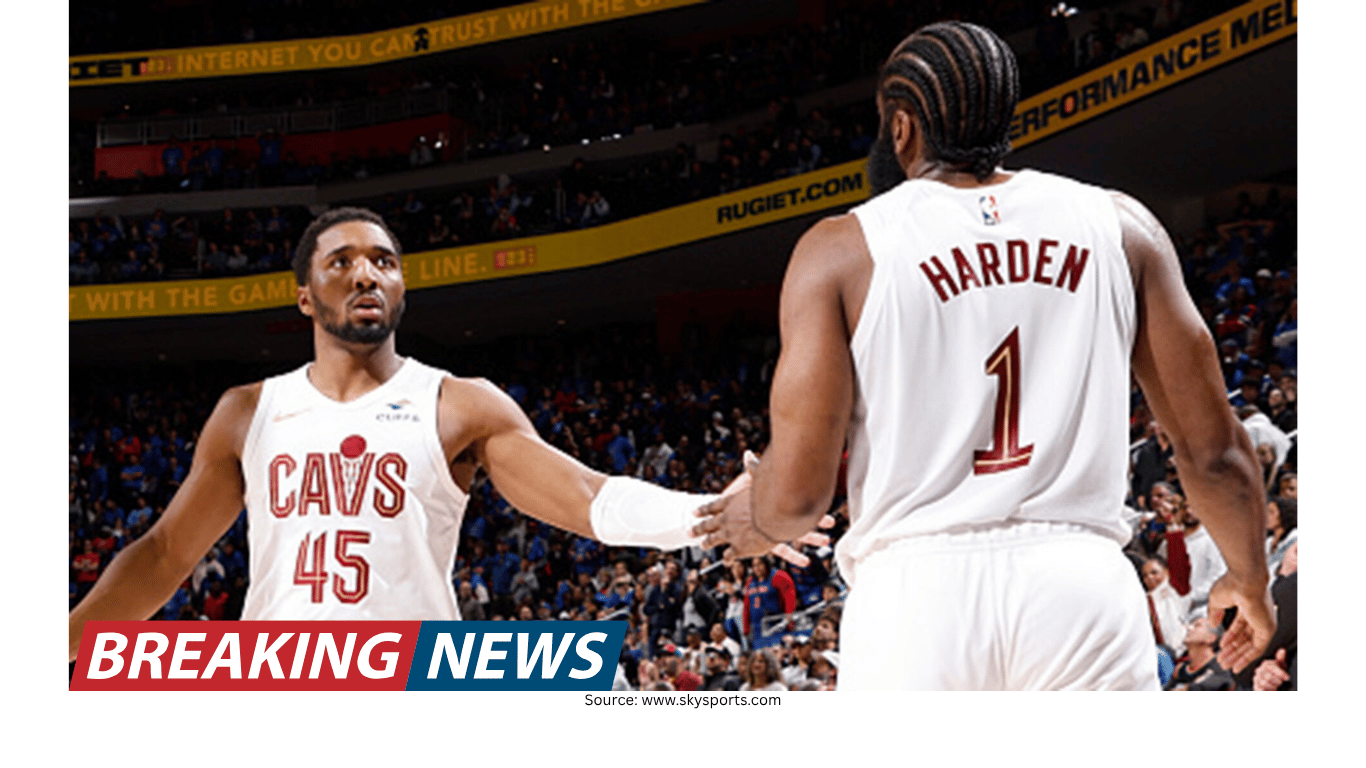
Cavaliers seize control of series with overtime win
The Cleveland Cavaliers are one win away from reaching the Eastern Conference finals after a dramatic 117-113 overtime victory over the Detroit Pistons on Wednesday night. The result gives Cleveland a 3-2 lead in the Eastern Conference semi-finals and shifts the pressure firmly onto Detroit as the series moves forward.
It was a game defined by swings in momentum: Detroit built substantial leads, Cleveland looked in trouble late in regulation, and then the Cavaliers produced a closing stretch of defensive control and timely scoring that ultimately decided the contest in overtime.
Harden delivers playoff-best scoring night
James Harden played the starring role for Cleveland, finishing with a playoff-best 30 points. Donovan Mitchell added 21 points, and together they anchored a comeback that required both shot-making and composure under pressure.
Harden’s scoring total was central to Cleveland’s ability to stay within reach when Detroit held the upper hand. In a game where the Cavaliers trailed by double digits earlier and were still behind late, Cleveland needed a consistent offensive presence to keep the deficit manageable and to create the platform for a late run.
Detroit’s early control: 15-point first-half lead
For long stretches, Detroit appeared positioned to level the series. The Pistons built a 15-point lead in the first half, setting the tone with enough offense to keep Cleveland on the back foot. That advantage reflected Detroit’s ability to generate points and, for a time, limit Cleveland’s rhythm.
Even after halftime, Detroit maintained control. The Pistons were still ahead by nine points late in regulation, holding a 103-94 lead with a little more than two minutes remaining. At that stage, the game looked to be slipping away from the Cavaliers, who needed a rapid turnaround to avoid falling behind in the series.
The late comeback: Cavaliers erase nine-point deficit
Cleveland’s rally gathered pace in the closing minutes of the fourth quarter. The Cavaliers gradually chipped away at the deficit and eventually drew level at 103-103 on Evan Mobley’s free throws with 45.2 seconds left in regulation.
That sequence was a key moment: it not only brought Cleveland back from the brink but also reset the contest into a final possession battle, where every stop and every trip to the line carried increased weight. The Cavaliers had been down by nine with two-plus minutes left; to force a tie before the final minute required both execution and defensive focus.
A defining stretch: 13-0 run and a defensive stand
The most decisive portion of the night came across the boundary of regulation and overtime. Cleveland went on a 13-0 run and, crucially, held Detroit scoreless for five minutes from late in the fourth quarter to midway through overtime.
In playoff basketball, those droughts can be fatal, especially when they arrive at the end of regulation and extend into extra time. Cleveland’s ability to keep Detroit off the scoreboard for that long was as important as any single basket. It turned a game Detroit had largely controlled into one that Cleveland could dictate.
That five-minute span also illustrated how quickly a postseason game can change. Detroit had been in position to close, but Cleveland’s stops and transition into points flipped the dynamic. When overtime arrived, the Cavaliers carried momentum that had been built in the final moments of regulation.
Mitchell’s overtime three opens daylight
In overtime, the Cavaliers found a timely separation. Cleveland went ahead by seven with 2:39 left in overtime on a Donovan Mitchell three-pointer. In a tight game, a shot that creates a multi-possession cushion can change the way both teams approach the remaining minutes.
Mitchell’s basket did not end the contest, but it gave Cleveland breathing room and forced Detroit to respond quickly. It also reinforced the Cavaliers’ ability to produce under pressure after spending much of the night chasing the score.
Cunningham’s big night keeps Pistons alive
Detroit had a standout individual performance from Cade Cunningham, who finished with 39 points and nine assists. His production was a major reason the Pistons were able to establish and maintain leads for much of the game.
Even after Cleveland’s surge, Cunningham continued to push Detroit forward. He made a jumper to pull the Pistons within two points with 25 seconds left, ensuring that the closing sequence remained tense and that Cleveland still had to execute in the final moments.
Closing moments: Harden at the line and on the glass
With Detroit within striking distance late in overtime, Cleveland needed to manage the clock and convert at the free-throw line. Harden made one free throw on an ensuing possession, then rebounded his own missed second attempt. That rebound mattered: it prevented Detroit from immediately regaining possession with a chance to tie or take the lead.
Harden then made another free throw to help seal the win. In a four-point overtime victory, those late free throws and the extra possession created by the rebound were pivotal details—small moments that can decide playoff games when margins are thin.
Series implications: Cleveland one win from the East finals
The victory gives the fourth-seeded Cavaliers a 3-2 lead in the series and places them in a strong position heading into Game 6. Cleveland now has two chances to secure the series and book a meeting with the New York Knicks in the Eastern Conference finals.
Game 6 is scheduled for Friday night in Cleveland. With the series lead in hand, the Cavaliers will have their first opportunity to close out the Pistons on their home floor. The stakes are clear: a win sends Cleveland through, while a loss would extend the series to a decisive seventh game.
What Detroit must do to extend the series
Detroit’s path is straightforward but demanding. If the top-seeded Pistons win Game 6, they will host Game 7 on Sunday. That scenario would reset the series into a winner-take-all finale, with Detroit gaining the advantage of playing the deciding game at home.
However, the Pistons will also have to respond to the way Game 5 ended. They were held scoreless for a five-minute stretch spanning late regulation and overtime, and they watched a 103-94 lead with just over two minutes left disappear. Addressing that late-game execution—both offensively and defensively—will be central if they are to force a seventh game.
Key game facts at a glance
- Final score: Cavaliers 117, Pistons 113 (overtime)
- Series: Cleveland leads 3-2 in the Eastern Conference semi-finals
- James Harden: 30 points (playoff-best)
- Donovan Mitchell: 21 points; hit a key three to put Cleveland up seven in overtime
- Cade Cunningham: 39 points, nine assists
- Turning point: Cleveland’s 13-0 run and five-minute scoreless stretch forced on Detroit from late fourth quarter to mid-overtime
- Next game: Game 6 on Friday night in Cleveland
- If necessary: Game 7 on Sunday, hosted by Detroit
A game that turned on composure and timing
Game 5 offered a clear reminder of how postseason outcomes can hinge on a handful of possessions. Detroit controlled much of the night, including a 15-point first-half advantage and a nine-point lead deep into the fourth quarter. Yet Cleveland’s ability to tie the game in the final minute, then deliver a sustained defensive stand into overtime, changed the result.
For the Cavaliers, the win represents both a step toward the Eastern Conference finals and a demonstration of resilience. For the Pistons, the loss is a missed opportunity—but also a prompt to regroup quickly with the season’s momentum now leaning toward Cleveland.
Looking ahead to Game 6
With Cleveland holding a 3-2 lead, the immediate focus turns to Friday night. The Cavaliers will attempt to close the series and move on to face the New York Knicks in the next round. Detroit, meanwhile, must win to keep its season alive and earn the right to bring the series back home for a Game 7.
After an overtime game decided by late free throws, a crucial rebound, and a defensive lockdown that lasted five minutes, the next matchup will test which team can best carry lessons forward—and which can execute when the pressure peaks again.