
Mainoo’s late strike seals 3-2 Manchester United win over Liverpool and confirms Champions League place
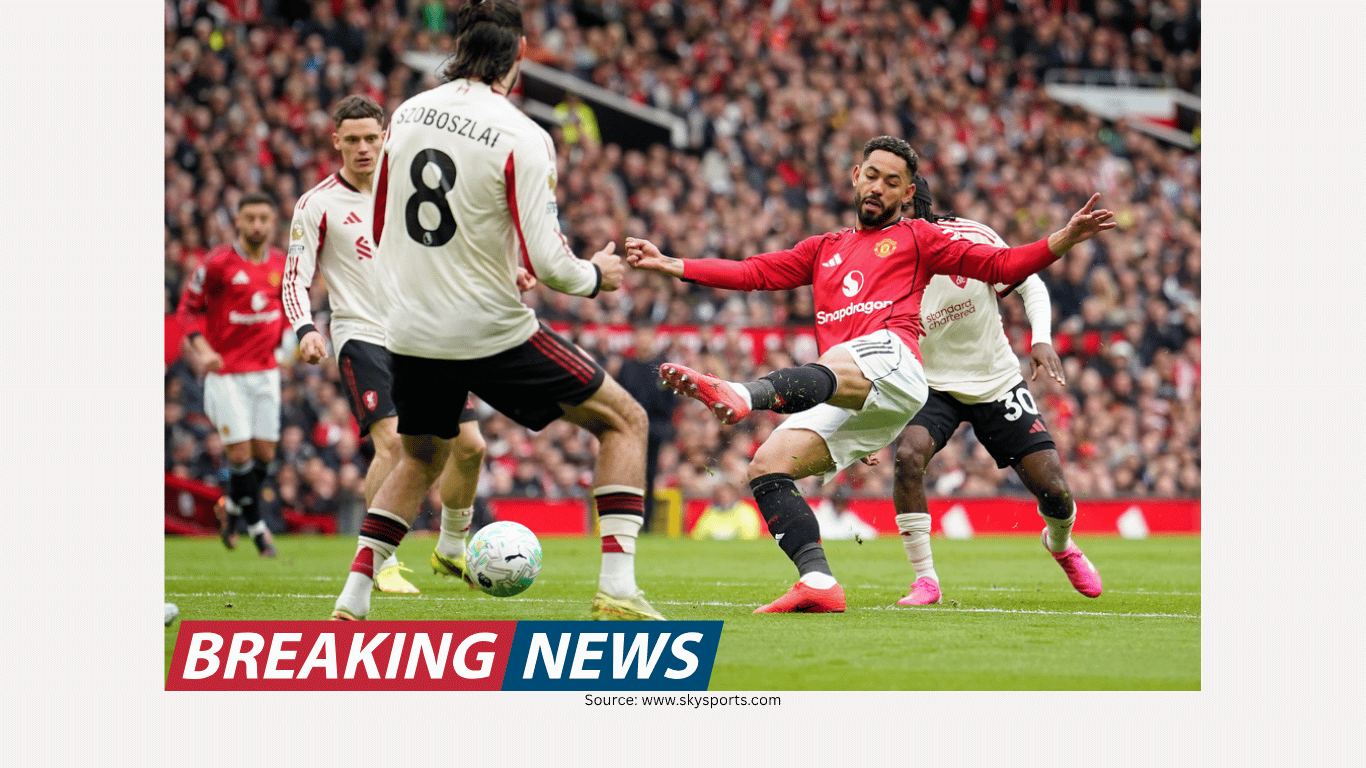
An Old Trafford classic ends with Mainoo as the match-winner
Manchester United and Liverpool delivered a five-goal Premier League spectacle at Old Trafford, played in front of an attendance of 74,027, with Kobbie Mainoo’s late finish settling an absorbing 3-2 win for the home side. The result not only extended United’s momentum under Michael Carrick but also confirmed Champions League football next season as they tightened their grip on third place.
The game had swung wildly. United surged into a two-goal lead, then watched Liverpool fight back to level, before Mainoo struck from the edge of the box to decide it. In a match full of big moments, errors, tactical questions and a VAR talking point, it was the youngster—named Player of the Match—who delivered the final, decisive action.
How United built a two-goal advantage
United started with intensity and were rewarded with an early breakthrough. Matheus Cunha’s left-footed effort took a decisive deflection off the back of Alexis Mac Allister and beat Liverpool goalkeeper Freddie Woodman. The opening goal set the tone for a first half in which United looked sharper and more purposeful.
The lead soon doubled. Benjamin Sesko forced the ball home after Bruno Fernandes’ centre was pushed into his path by Woodman. The finish made it 2-0 and left Liverpool chasing the game at a ground where momentum can be difficult to halt once the crowd is engaged.
For long spells of the first half, United’s structure and energy were apparent. Bruno Fernandes influenced play from advanced areas, Casemiro offered control and bite in midfield, and Cunha’s directness created problems. Liverpool, by contrast, struggled to impose themselves early, a theme that has become a point of concern in their away performances.
Liverpool’s response: a comeback fuelled by pressure and mistakes
United’s advantage did not last. After the break, the match turned on a combination of Liverpool’s improved pressing and United’s inability to manage key moments. The comeback began with a costly error from Amad Diallo, introduced as a substitute. He gifted possession to Dominik Szoboszlai, who then produced a fine solo goal to pull Liverpool back into contention.
With the deficit reduced, the contest opened up. Liverpool sensed vulnerability and soon found an equaliser after another mistake. A poor kick from United goalkeeper Senne Lammens was seized upon, and Cody Gakpo made it 2-2. From two goals down to level, Liverpool had dragged themselves back into a match that had seemed to be slipping away.
At that stage, the game felt as though it could go either way. United had the crowd and flashes of attacking quality; Liverpool had momentum and the belief that their second-half response could lead to a complete turnaround.
Mainoo’s decisive moment
The winning goal arrived when the ball fell to Mainoo on the edge of the area. He struck hard and low beyond Woodman to restore United’s lead at 3-2 and ultimately secure the points. It was a finish of conviction, delivered under pressure in a match that had already tested both teams’ composure.
Mainoo’s performance carried added narrative weight. The midfielder had been frozen out of the team by Ruben Amorim, yet under Carrick he stepped into the spotlight and “stole the show.” In a rivalry match defined by emotion and fine margins, he provided the moment that mattered most.
Champions League qualification confirmed for Carrick’s United
Beyond the immediate drama, the result had significant implications. The three points confirmed that Manchester United will play in the Champions League next season. The win also strengthened their hold on third place, underlining the progress they have made in this period under Carrick.
For Liverpool, defeat left them fourth and still with work to do. The match also intensified the scrutiny on head coach Arne Slot, who faces the task of convincing supporters that he is the right figure to lead the club into the next season.
The VAR talking point: Sesko’s goal and the handball debate
While United’s second goal stood, it did not pass without controversy. Slow-motion replays later indicated Sesko may have made a “feather-like” touch on the ball with his hand. Liverpool were left aggrieved, particularly as the initial replays shown during the VAR process did not appear to include the close-up view that suggested contact.
Slot addressed the incident in his press conference and framed it as part of a wider discussion about how football applies handball rules. He suggested that if there was a touch, the goal should have been disallowed under the current rule, while also questioning what threshold should be used to rule out a goal.
Slot also expressed frustration that, in his view, borderline decisions have repeatedly gone against Liverpool this season. He cited examples involving a penalty claim and stoppages for injuries and players off the pitch, arguing that there has been a “pattern” across the campaign.
However, he also pointed to Liverpool’s own responsibility for the goals they conceded, emphasising that the second goal was not solely about the handball question. He highlighted the loss of possession in a “stupid position” and the team’s failure in key duels as factors that Liverpool can control more directly.
Post-match reaction: Mainoo on belief and momentum
Speaking after the match, Mainoo credited the group’s resilience and direction under Carrick. He described the turnaround in the game as a “credit to the players and the manager,” adding that the team wants to finish the season strongly.
Mainoo also spoke about confidence within the squad, saying the players want to “follow him and fight for him,” and that this was reflected in their performance at Old Trafford.
Carrick on Sir Alex Ferguson’s illness before kick-off
The occasion carried an added poignancy after news emerged that Sir Alex Ferguson had been taken to hospital before the game after feeling unwell at Old Trafford. Carrick said he had no update on Ferguson’s condition, but expressed his concern and offered good wishes.
He added that he hoped the result could provide a boost when Ferguson heard about it. The news gave the match an emotional backdrop for many inside the stadium, and it was referenced as part of the day’s wider context.
What the match suggested about both teams
For the majority of supporters at Old Trafford, it was a game to savour. The performance also fed into the broader conversation about Carrick’s future. Former United skipper Roy Keane had suggested beforehand that the result would have “a big bearing” on whether Carrick would get the job, and the victory—secured in dramatic fashion against a major rival—will only intensify that discussion.
From a football perspective, the match showed both United’s attacking potential and their vulnerability when managing leads. Going 2-0 up indicated their ability to start fast and hurt opponents, but conceding twice after the break highlighted lapses that could be costly against top-level opposition. Still, the fact they found a way to win after being pegged back will be viewed as a significant positive.
Liverpool’s performance raised familiar questions about their approach away from home. Their comeback demonstrated they can still press effectively and create momentum, yet their slow start reinforced concerns about passivity in first halves on the road. The match also fed into the ongoing debate about what Slot is building, with supporters weighing the balance between adapting an established style and moving too far from the club’s identity.
Liverpool’s away-day first-half problem
The wider critique of Liverpool’s away form was sharpened by another blank first half at Old Trafford. The figures outlined after the match were stark: Liverpool have scored just four goals in their last 19 first halves. The issue was not framed purely as finishing, but as a broader lack of urgency—slow tempo, disjointed pressing, and a tendency to react rather than dictate.
For a club expected to compete for major honours, this has become an uncomfortable theme in what was described as a wretched season. Slot’s challenge is not only to correct results but to address the patterns in performance that supporters recognise as drifting away from the intensity historically associated with the team.
Player ratings and standout performers
Mainoo was named Player of the Match and his rating reflected his influence. United had strong contributions across the pitch, while Liverpool’s best individual display came from Szoboszlai, whose solo goal was a turning point in their comeback attempt.
- Manchester United: Lammens 5, Dalot 7, Maguire 7, Heaven 7, Shaw 6, Casemiro 7, Mainoo 8, Fernandes 7, Cunha 8, Mbeumo 6, Sesko 7. Subs: Amad 5, Dorgu 5, Zirkzee n/a, Yoro n/a.
- Liverpool: Woodman 6, Jones 5, Van Dijk 5, Konate 5, Robertson 6, Gravenberch 6, Szoboszlai 8, Mac Allister 5, Frimpong 5, Wirtz 5, Gakpo 7. Subs: Kerkez 6, Ngumoha 6, Chiesa n/a.
Key match moments at a glance
- United took the lead through Cunha’s left-footed shot, deflected off Mac Allister.
- Sesko made it 2-0 after Fernandes’ centre was pushed into his path by Woodman.
- Diallo’s error allowed Szoboszlai to score a solo goal and start Liverpool’s comeback.
- Lammens’ poor kick was punished as Gakpo equalised for 2-2.
- Mainoo struck from the edge of the box to win it 3-2.
What comes next
United’s win will be remembered for its drama, but its meaning is also practical: Champions League qualification is secured, and the sense of direction under Carrick has been reinforced by a victory over their biggest rivals. For Liverpool, the defeat deepens the need for improvement in away performances and first-half intensity, while the debate over decisions, identity and transition continues to follow Slot as the season moves toward its conclusion.