
PSG take control against Liverpool with 2-0 first-leg win in Paris
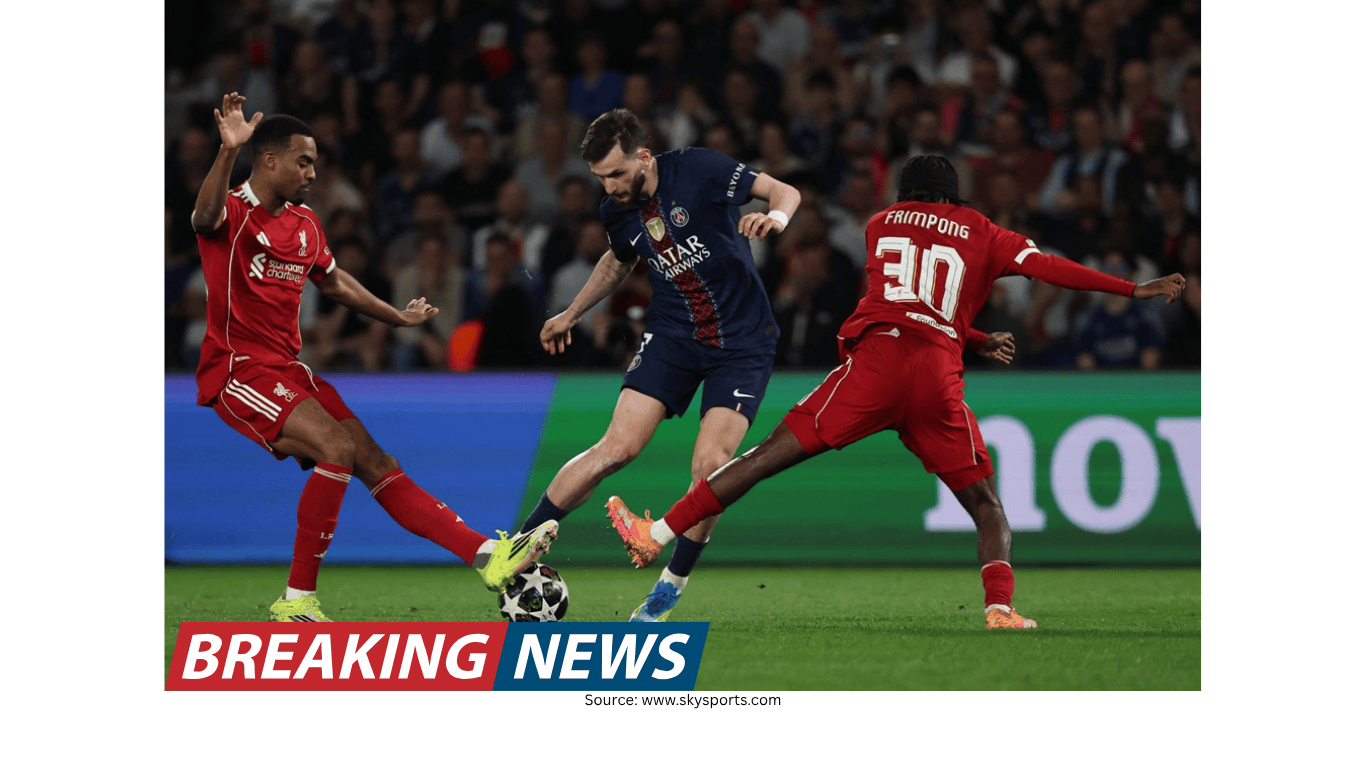
Paris Saint-Germain put themselves in a strong position to reach the UEFA Champions League semi-finals after beating Liverpool 2-0 in the quarter-final first leg at the Parc des Princes. In front of an attendance of 47,511, the holders delivered a one-sided performance, scoring through Desire Doue and Khvicha Kvaratskhelia and creating enough chances to suggest the tie could have been close to out of sight.
Liverpool, by contrast, left Paris facing a steep climb in the return match at Anfield. They managed only three shots across the game and did not hit the target once, a statistic that reflected how comprehensively they were second best on the night. The defeat also carried an unwanted historical footnote: it was Liverpool’s fourth consecutive away loss, their first run of that kind since April 2012.
How the first leg unfolded
The match narrative was established early. PSG played with speed and control, moving the ball at what Liverpool manager Arne Slot later described as “incredible tempo all over the place.” Liverpool attempted to respond with a significant tactical shift, but the home side’s rhythm and attacking variety repeatedly pulled them out of shape and into defensive emergencies.
PSG’s opener came from Doue, whose effort took a deflection on its way in. While Liverpool felt the goal was harsh in the sense that it did not come from an obvious giveaway, it was consistent with the direction of the contest: PSG were the team forcing the moments, sustaining pressure, and spending long periods in the attacking third.
The second goal arrived when Kvaratskhelia punished poor defending. Liverpool midfielder Ryan Gravenberch failed to track him, allowing the PSG forward to receive a pass before cutting inside and finishing with quality. The strike underlined PSG’s ability to exploit small lapses, and it also captured the broader theme of the evening: Liverpool were often a step behind in key areas, particularly when PSG accelerated through midfield and into the spaces around the back line.
Liverpool’s tactical change and its limits
Slot altered his system to a back five in an attempt to contain PSG’s threat. The adjustment was designed to provide additional cover against PSG’s wide and inside-forward movements, and to reduce the exposure that can come when the French champions attack with multiple runners.
However, the plan did not unsettle PSG. Whether Liverpool tried to press high or dropped into a low block, PSG found ways to progress the ball and create chances. Slot later explained that when Liverpool pressed, PSG were often able to play through them; when Liverpool went man-for-man, PSG looked to play in behind; and when Liverpool sat deeper, they conceded fewer clear openings but still suffered at a decisive moment—even the first goal came with Liverpool in a low block.
One of the most notable selection decisions was the absence of Mohamed Salah from the starting line-up. He was an unused substitute, coming only two weeks after confirming he will leave at the end of the campaign. Liverpool’s attacking output in Paris was minimal, and the lack of a shot on target illustrated how difficult it was for them to turn defensive work into meaningful threat.
PSG’s dominance and the role of Liverpool’s goalkeeper
PSG’s two-goal advantage could easily have been larger. Liverpool goalkeeper Giorgi Mamardashvili produced a series of fine saves to keep the scoreline manageable, denying attempts from Doue, Kvaratskhelia, Ousmane Dembele and Achraf Hakimi. PSG also wasted opportunities, and their finishing did not fully match the volume of chances they created.
That combination—strong goalkeeping from Mamardashvili and wasteful moments from PSG—was crucial in shaping the tie. A 2-0 deficit is significant, but it is not definitive in a two-legged knockout. Liverpool can still point to the fact that, despite being outplayed, they remain within striking distance if they can produce a markedly improved performance at Anfield.
Penalty controversy and VAR involvement
There was also controversy around penalty decisions. PSG felt aggrieved not to be awarded at least one spot-kick. VAR overturned the referee’s decision to penalise Ibrahima Konate for a foul on Warren Zaire-Emery, and later opted not to penalise Konate for a push on Nuno Mendes. Those moments added to PSG’s sense that the scoreline might have been even more emphatic with different calls, though the match still ended with a clear advantage for the home side.
Second-half changes and Liverpool’s lack of response
Slot looked for solutions from the bench, introducing the fit-again Alexander Isak for his first appearance since December. The change was intended to spark a response and give Liverpool a stronger presence in attacking areas. Yet the pattern of the game did not shift in any meaningful way. Liverpool never looked close to pulling a goal back, and PSG continued to find openings, particularly in the closing stages.
For Liverpool, the inability to build sustained attacks was as concerning as the defensive issues. They were repeatedly forced into reactive defending, and their limited output going forward meant PSG could maintain control without having to manage extended periods of pressure in their own half.
What the result means for the tie
PSG take a 2-0 lead into the second leg, and the first match suggested a gap in performance levels on the night. Liverpool will need “major improvement” at Anfield to reach the last four, not only to create chances but also to prevent PSG from playing with the same freedom and tempo they enjoyed in Paris.
Slot, though, emphasised that the tie remains alive. He pointed to the potential impact of Anfield and to his own experience of similar two-legged dynamics, noting that while a previous visit to Paris had produced a narrow win despite a similar pattern, the return match at Anfield had been “completely different.” Liverpool’s hope is that home conditions can help them play higher up the pitch, apply more consistent pressure, and force PSG into more defensive situations than they faced in the first leg.
Arne Slot’s assessment
After the match, Slot offered a frank evaluation. He said Liverpool were “lucky to only lose 2-0” given PSG’s chances, while also feeling the first goal was harsh because Liverpool “didn’t give anything away.” He highlighted the difficulty of creating opportunities against a PSG side circulating the ball quickly across the pitch and acknowledged that Liverpool’s pressing approach worked only intermittently.
Slot’s comments also outlined the tactical dilemma PSG posed. When Liverpool pushed up, PSG could break through the press. When Liverpool matched up individually, PSG looked for runs in behind. And even when Liverpool held a deeper shape, they were not immune to decisive moments. His overall message, however, was that the deficit is not insurmountable, particularly with the second leg to be played at Anfield.
Key performers and match ratings
Kvaratskhelia was named Player of the Match after a performance that combined direct running with a decisive finish for the second goal. Doue also made a major impact, scoring the opener and forcing saves from Mamardashvili. PSG’s control in midfield was reflected in the strong ratings for Vitinha and Joao Neves, while Liverpool’s best-rated player was Mamardashvili for his goalkeeping under sustained pressure.
- PSG scorers: Desire Doue, Khvicha Kvaratskhelia
- Player of the Match: Khvicha Kvaratskhelia
- Attendance: 47,511
- Liverpool shooting: Three shots, none on target
Team line-ups and substitutes used
PSG started with Safonov; Hakimi, Marquinhos, Pacho, Nuno Mendes; Zaire-Emery, Vitinha, Joao Neves; Doue, Dembele, Kvaratskhelia. Their substitutes included Lee Kang-In and Hernandez.
Liverpool started with Mamardashvili; Gomez, Konate, Van Dijk, Frimpong; Kerkez, Szoboszlai, Gravenberch, Mac Allister; Wirtz, Ekitike. Their substitutes included Robertson, Gakpo, Jones, Isak and Nyoni.
The road ahead: Anfield awaits
The first leg left PSG in control, but not beyond reach. Liverpool’s task is clear: they must find a way to create more than they did in Paris, while also tightening the defensive details that PSG exploited so effectively. PSG, meanwhile, will travel to Anfield knowing that their tempo, chance creation, and ability to play through different defensive approaches gave them a deserved advantage in the first meeting.
Ultimately, the quarter-final will now be judged on whether Liverpool can turn the second leg into the kind of game they never managed to create in Paris—one where they can impose themselves, generate shots on target, and test PSG in a way that the first leg did not. PSG have the lead and the performance to match it; Liverpool have the venue and the urgency. The second leg will decide which of those factors proves decisive.