
Igor Tudor refuses to discuss Tottenham future after record four defeats and goalkeeper controversy in Madrid
Tudor’s start at Spurs hits a historic low
Igor Tudor’s brief Tottenham tenure moved into unprecedented territory in Madrid as the club’s Champions League last-16 tie began with a chaotic 5-2 defeat to Atletico Madrid. The result left Tudor as the first Spurs head coach to lose each of his first four games in charge, a record that underlined how quickly pressure has built around the Croatian just weeks into the job.
Tottenham’s problems stretched beyond a single night. The loss also confirmed a sixth consecutive defeat, the first time in the club’s 143-year history that such a run has been recorded. With the first leg ending in a three-goal deficit, the second leg is now framed as a daunting task, and the immediate fixture list offers little respite.
Tudor has been in charge for less than a month, but the scale of the defeat and the manner in which it unfolded ensured the discussion after full-time was not limited to tactics or individual moments. Instead, it centred on leadership, decision-making, and whether the situation is deteriorating rather than stabilising.
“No comment”: Tudor declines to address his position
Asked directly whether he deserved to continue as Tottenham head coach, Tudor refused to engage with the question. “No comment,” he said after the match, offering no public defence of his performance or indication of how secure he believes his position to be.
That brief response came after a night in which Tottenham were heavily beaten and in which several records fell in the wrong direction. The silence on his own future will do little to calm the atmosphere around the club, particularly given the sequence of defeats and the scrutiny prompted by a major in-game decision.
Tudor did, however, speak about what he sees as his immediate responsibility. Looking ahead to the next match, he said: “I try to do my best. What a coach needs to do.”
A bold goalkeeper call that unravelled within minutes
The defining storyline of the match was Tudor’s handling of the goalkeeping position. He opted to drop experienced goalkeeper Guglielmo Vicario and give 22-year-old Antonin Kinsky his first Champions League start. The decision backfired quickly and dramatically.
Kinsky’s mistakes contributed to two of Atletico’s three early goals, and Tudor reversed course after only 17 minutes by substituting the young goalkeeper. Such a change, especially in a Champions League knockout tie, is rare. Tudor acknowledged as much, describing it as an unusual moment in his coaching career.
“It is very rare. I have coached 15 years and never done this,” Tudor said. “It was necessary to preserve the guy and to preserve the team.”
For Tottenham, the substitution did not immediately stem the damage. Vicario conceded just five minutes after coming on, with Robin Le Normand scoring Atletico’s fourth. By that point, the match was slipping away, and the scoreline was turning into a heavy blow for a side already struggling for stability and confidence.
Tudor: the team is “fragile” and “weak”
Tudor’s explanation for the early goalkeeper change was rooted in his assessment of Tottenham’s current mental and emotional state. He suggested the opening phase of the game was too much for a team lacking resilience.
“The start of the game was too much for us in this moment when we are fragile, when we are weak,” he said.
While he insisted the decision was made to protect both the player and the team, the episode inevitably became a symbol of Tottenham’s broader difficulties: a side short on confidence, caught in a spiral of poor results, and now facing the additional burden of a high-profile controversy involving a young player thrust into a demanding situation.
Kinsky’s reaction and the fallout on the pitch
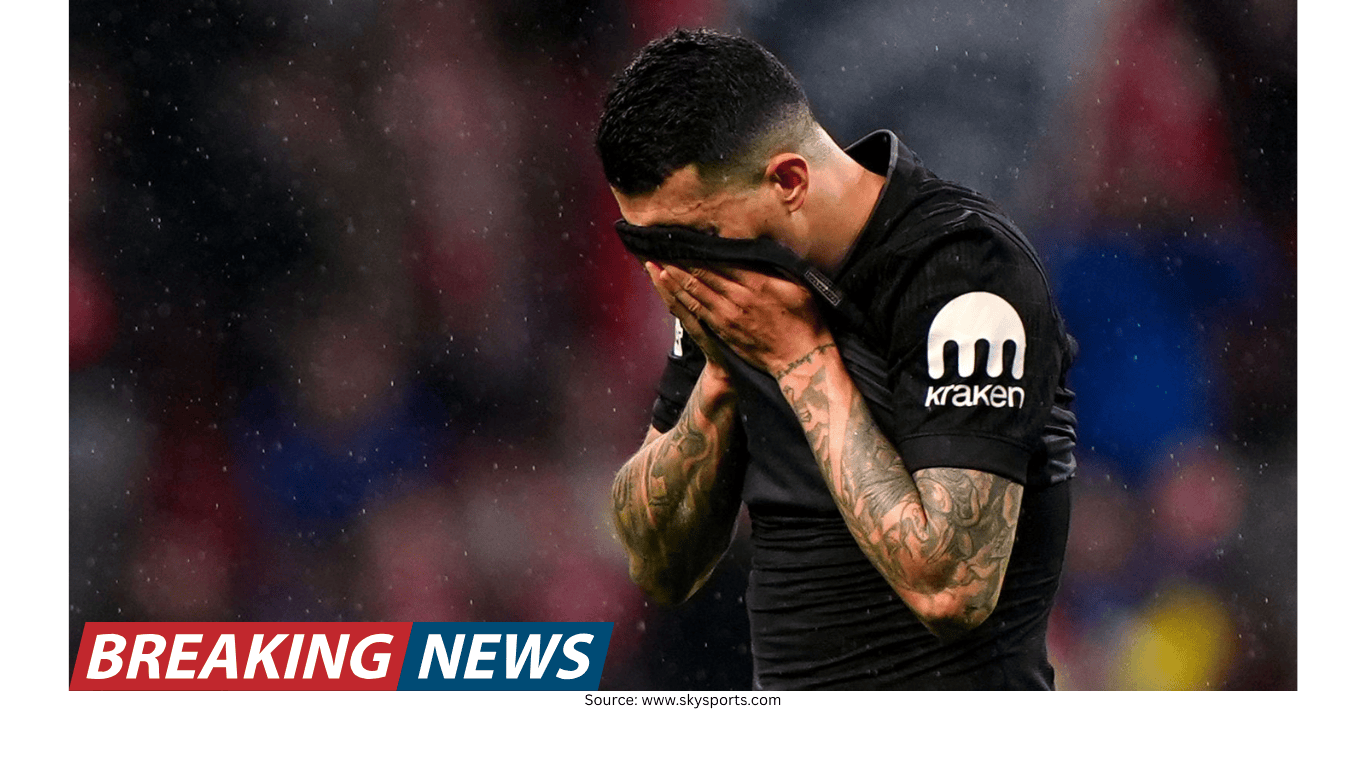
Kinsky appeared distraught as he left the field. He looked inconsolable after being removed so early, a moment that was visibly uncomfortable and that drew attention not only because of the substitution itself, but because of the human impact it had on a 22-year-old making his first Champions League start.
Tudor said he spoke with Kinsky and attempted to frame the change as a necessary act rather than a personal rebuke.
“Kinsky was sorry. The team is with him. Me too. I was speaking with him. He understands the moment, he understands why he went out. He is a very good goalkeeper. It is never about one player,” Tudor said.
That final point—“It is never about one player”—was an effort to distribute responsibility more broadly. But the substitution was so early and so stark that it inevitably placed Kinsky at the centre of the narrative, regardless of Tudor’s intention to avoid singling him out.
Reports of a toxic atmosphere and player concern
Post-match commentary from Madrid painted a picture of a tense environment. It was suggested that the situation around the club has become “very, very toxic,” with attention drawn to how players reacted to Kinsky’s removal and what it might mean for dressing-room dynamics.
It was reported that Joao Palhinha and Conor Gallagher ran to console Kinsky, a gesture interpreted as players being worried about his welfare in the moment. It was also noted that Tudor did not acknowledge Kinsky as he came off, which was described as an “ultimate humiliation.”
There was also discussion of footage appearing to show Cristian Romero urging Tudor to take Kinsky off. Tudor was asked about that and denied it, but the existence of the footage added another layer to the scrutiny of how the decision was reached and whether it was influenced by events on the pitch.
The broader assessment offered was that there has been no immediate improvement since Tudor’s appointment. Instead, Tottenham were said to look worse, with the warning that results could deteriorate further before any recovery begins.
Supporters’ Trust demands “emergency action”
The Tottenham Hotspur Supporters’ Trust responded strongly, calling for “emergency action” following the chaotic defeat in Madrid. Their statement framed the performance and result as a “total disgrace” and linked it to what they described as a wider lack of leadership at the club.
In their view, the problems extend beyond a single match or one selection call. They criticised decisions around the January transfer window and management appointments, and questioned the absence of leadership and club identity in those choices.
“Tonight’s performance and result is a total disgrace. It’s symptomatic of the abysmal state of things at Spurs right now,” the statement read.
The group also expressed frustration about what they see as a lack of direction and demanded action to prevent further decline.
“Emergency action is needed as right now we are sleepwalking off the edge of a cliff,” the statement continued, adding that supporters “will not sit by and watch the club continue to decline.”
They also raised the issue of matchgoing fans, saying that at the very least those in Madrid should have their match tickets refunded, while stressing that the central demand is for the club to give supporters something to be proud of.
Records, pressure and a daunting schedule
The defeat in Madrid carried immediate competitive consequences and longer-term implications for Tudor’s standing. Tottenham are now facing an uphill task in the second leg of the Champions League tie, and the mood around the club has darkened further because of the historic losing run and the way the match unfolded.
Next comes a trip to Anfield to face Liverpool on Sunday, followed shortly by the second leg of the European tie three days later. In the context of four defeats in four games under Tudor and a club-record six-match losing streak, the schedule reads less like an opportunity for a reset and more like a continuation of a difficult stretch.
For Tudor, the immediate question is not only how to prepare for two major fixtures, but how to steady a squad described by its own head coach as fragile and weak. For the club, the questions are broader: whether the current plan is working, how much time can be afforded amid worsening results, and how to manage the fallout from a night that placed a young goalkeeper under an intense spotlight.
What the Madrid defeat revealed
Tottenham’s 5-2 loss to Atletico Madrid was notable not just for the scoreline but for the sequence of events: the early goals, the rapid reversal of a major selection decision, and the visible distress of a young player substituted before the match had settled.
It also exposed how quickly narratives can harden when results go against a team. Tudor’s refusal to comment on his future, combined with the supporters’ demand for emergency action and reports of a toxic atmosphere, ensured that the discussion moved beyond the technical details of a Champions League tie and into the realm of governance, leadership and accountability.
Whether Tottenham can stabilise in the short term remains uncertain. What is clear from this extraordinary night in Madrid is that the pressure on Tudor has intensified sharply, and the club’s immediate future will be shaped as much by how it responds to this crisis as by the next set of results.
- Tudor became the first Tottenham head coach to lose his first four games in charge.
- The Atletico defeat extended Spurs’ losing run to six, a first in the club’s 143-year history.
- Kinsky was substituted after 17 minutes following errors that contributed to two early Atletico goals.
- The Supporters’ Trust called for “emergency action” and criticised leadership and decision-making.