
PSG edge Bayern 5-4 in extraordinary nine-goal Champions League semi-final first leg
A semi-final for the ages leaves everything to play for
Paris Saint-Germain and Bayern Munich produced a Champions League spectacle that will be discussed for years, as the holders PSG claimed a 5-4 victory in the first leg of their semi-final in Paris. It was a night of relentless attacking, rapid momentum swings and high-stakes drama, with the contest repeatedly threatening to tip decisively one way before snapping back the other.
The match entered the record books for its sheer volume of goals. It was the first time in a European semi-final that both teams scored four or more, and it matched the joint-highest scoring European Cup semi-final on record, alongside Rangers’ 6-3 defeat to Eintracht Frankfurt in 1960. For all the chaos, the tie remains finely balanced: the teams meet again next Wednesday in Germany for the second leg.
Five goals before the break: PSG 3-2 Bayern at half-time
The tone was set early in a topsy-turvy first half that delivered five goals and barely a pause for breath. Bayern struck first when Harry Kane converted a 17th-minute penalty, a goal that marked his 59th for club and country this season. PSG responded quickly through Khvicha Kvaratskhelia, who levelled with a superb finish and signalled that Bayern’s early control would not last.
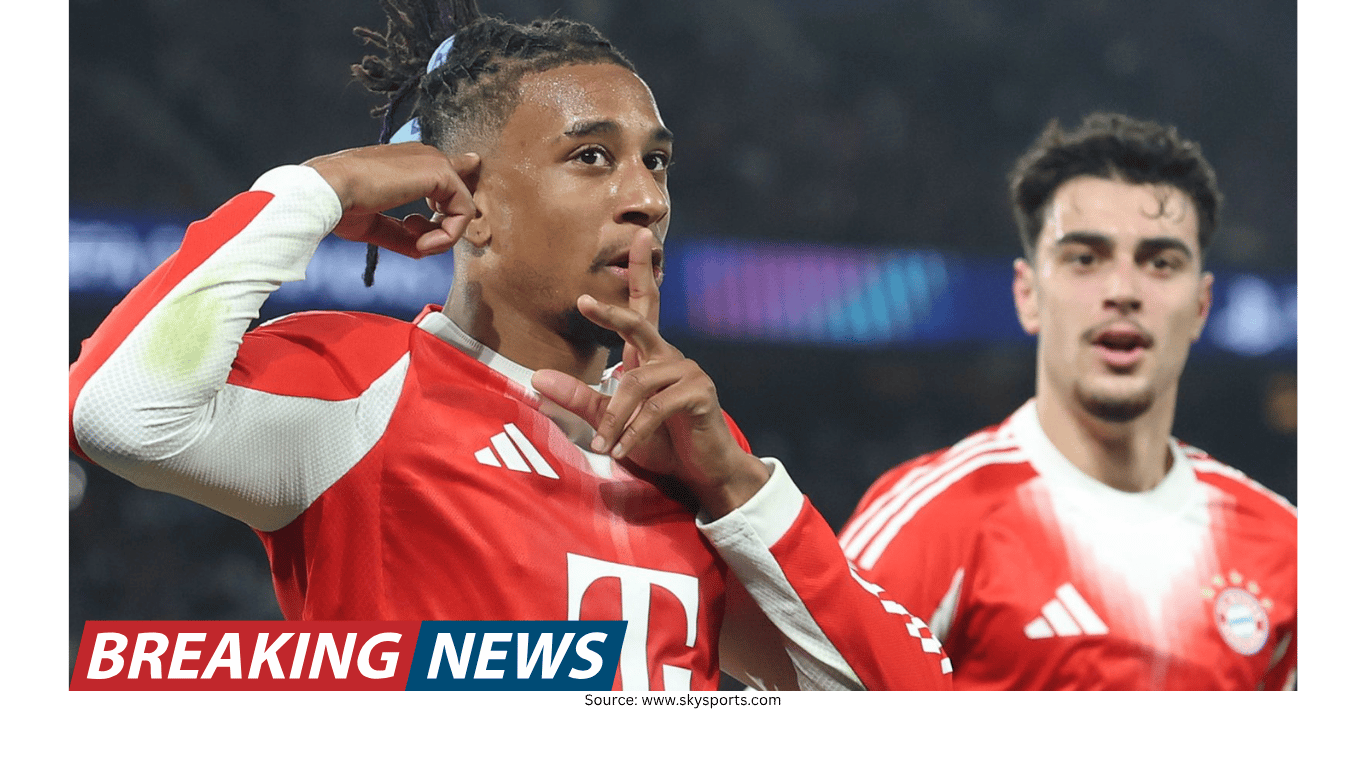
PSG then moved in front in the 33rd minute when Joao Neves headed home, turning the atmosphere in Paris from tense to euphoric. Yet the lead lasted only eight minutes. Michael Olise smashed in an equaliser in the 41st minute, restoring parity and underlining how easily both sides were finding routes to goal.
Even by the standards of an open semi-final, the closing moments of the half were extraordinary. In the fifth minute of added time, PSG regained the lead through Ousmane Dembele’s penalty. The spot-kick was awarded for an Alphonso Davies handball following a VAR review at the pitchside monitor. The incident drew attention because Dembele’s cross appeared to strike Davies’ leg before making contact with his arm, but the decision stood and Dembele converted to make it 3-2 at the interval.
PSG surge to 5-2 in 143 seconds
If the first half had been breathless, the start of the second was even more decisive. PSG came out with renewed intensity, and for a period they looked capable of turning the tie into a near-formality. Kvaratskhelia swept home to extend the lead, and then Dembele added another with a lovely finish that went in off the post.
The two goals arrived in the space of just 143 seconds, and by the 58th minute PSG were 5-2 up. In a semi-final between two elite sides, a three-goal cushion felt significant. The home team’s attacking play was flowing, and the match seemed to be slipping away from Bayern.
Bayern’s late response keeps the tie alive at 5-4
Yet the story of the night was that no lead felt safe. Bayern refused to accept the scoreline, and their response came quickly. Dayot Upamecano headed in during the 65th minute to start the fightback, and just three minutes later Luis Diaz made it 5-4 with a superb piece of skill and finishing.
Díaz’s goal showcased Bayern’s quality in transition. He wonderfully brought down Kane’s lobbed pass before firing past PSG goalkeeper Matvey Safonov. The strike was initially ruled out for offside, but a VAR check overturned the decision, ensuring the closing stages would be played with the tension of a tie that had suddenly become very much alive again.
For Bayern, the late surge offers genuine hope heading into the second leg. For PSG, it was a reminder that even a dominant spell can be undone quickly against opposition with this level of attacking talent.
Dembele shines and predicts more goals in Munich
Dembele, named man of the match after scoring twice, struck a reflective note when assessing the game. While he welcomed the result, he also acknowledged that PSG’s performance dipped after building a 5-2 advantage. His comments suggested PSG will not attempt to protect their lead by changing approach in the return leg.
Speaking after the game, Dembele described it as a contest between two great teams who attack and do not hesitate. He said PSG were happy with the result, even though they “stopped playing a bit towards the end” when 5-2 up. Crucially, he indicated PSG will stick to their philosophy in Munich: they will attack, and he expects Bayern to do the same, predicting another “great second match”.
The numbers and the style of the first leg make that prediction plausible. The match was wide open for long stretches, and both teams repeatedly committed players forward, creating a sense that the next goal was always imminent.
Neuer’s night: nine goals and no saves
One of the most striking statistical details from the match was that Bayern goalkeeper Manuel Neuer failed to make a save across the nine-goal thriller. In a game defined by finishing and attacking quality, it was an unusual footnote, and it reflected just how often chances were converted rather than repelled.
Whether that was down to the quality of the shots, the positions from which they were taken, or the speed with which attacks developed, the end result was the same: goals arrived in waves, and the usual rhythm of a high-level European knockout match was replaced by something closer to a shootout.
Debate over defending: Kane praises, Rooney disagrees
As often happens after games with a scoreline like 5-4, the discussion quickly turned to whether the match was a celebration of attacking excellence or an indictment of defensive standards. Kane, speaking after the game, took a positive view of the defending on show, even with nine goals scored.
He argued that there was “some amazing defending out there,” pointing to the difficulty of the job against the best attackers in the world. Kane suggested that, in such matches, attackers will sometimes come out on top and show their quality, and he credited defenders for the challenges they face when asked to cover large spaces and handle elite wingers and forwards.
Wayne Rooney offered a blunt counterpoint. While making clear he is a fan of Kane, Rooney said there was “no way” Kane could be praising his defenders and suggested Kane might be trying to give his team-mates confidence for the second leg. Rooney’s assessment was that the defending from both teams was “really bad”.
Carragher’s view: attacking quality made goals almost inevitable
Jamie Carragher struck a more nuanced tone, focusing on the level of attacking performance rather than solely blaming defensive errors. In his view, the match was a case of attackers consistently winning individual battles and producing moments of high quality that were difficult to stop.
Carragher noted that in games like this, the default reaction is to say the defending is not good enough for this level. But he argued that every attacking player on the pitch performed at an eight or nine out of ten, repeatedly getting the better of their direct opponents. When he revisited the goals, he felt they were “just great goals” rather than the product of obvious goalkeeping mistakes or foolish defending.
He also framed the match in the context of wider debates about risk in modern football. Carragher pointed out that there is frequent criticism of teams that take too few risks and focus on not losing rather than on winning. In this semi-final, risk was everywhere. He acknowledged that those watching with “defensive hats on” might have been driven “crazy” by what they saw, but he also argued the match was anything but boring, describing it as “just crazy at times”.
What the second leg could look like
With PSG taking a one-goal advantage to Germany, the return match promises to be shaped by two competing realities. On one hand, PSG have already shown they can hurt Bayern repeatedly, and they will travel with the confidence of scoring five against elite opposition. On the other, Bayern’s late rally means they do not need to imagine a miracle; they have already demonstrated they can swing the momentum and close a big gap quickly.
There is also a historical angle to the potential scoring. If five goals are scored at the Allianz Arena in the second leg, the tie will become the highest-scoring Champions League knockout tie in history. That possibility, combined with Dembele’s expectation that both teams will continue to attack, sets the stage for another night where the usual rules of caution may not apply.
For PSG, the key question is how to manage the moments when control appears within reach. Dembele’s admission that the team “stopped playing a bit” after going 5-2 up is likely to be a point of focus. For Bayern, the challenge will be to find the balance between chasing the game and avoiding the kind of open spaces that PSG exploited so ruthlessly in Paris.
Key moments at a glance
- Harry Kane opened the scoring with a 17th-minute penalty, his 59th goal for club and country this season.
- Kvaratskhelia quickly levelled with a superb goal before Joao Neves headed PSG into a 33rd-minute lead.
- Michael Olise equalised in the 41st minute, but Dembele restored PSG’s advantage with a stoppage-time penalty after a VAR review for a Davies handball.
- Early in the second half, Kvaratskhelia and Dembele scored in the space of 143 seconds to make it 5-2 by the 58th minute.
- Bayern hit back through Upamecano and then Diaz, whose goal was initially ruled out for offside before VAR overturned the decision.
A semi-final defined by ambition, not caution
In the end, the first leg was a vivid reminder of what can happen when two teams commit to attack at the highest level. PSG’s 5-4 win gives them a narrow edge, but it also leaves Bayern with clear reasons to believe the tie can still be turned around. The match in Paris delivered history, controversy, and a debate about whether the night was a defensive failure or an attacking masterclass.
What is not in doubt is that the second leg now carries enormous intrigue. With the scoreline so close and both teams seemingly unwilling to abandon their attacking instincts, the semi-final remains wide open as it moves to Germany next Wednesday.