
Hansi Flick defends Barcelona rotation as spotlight falls on Lamine Yamal reactions
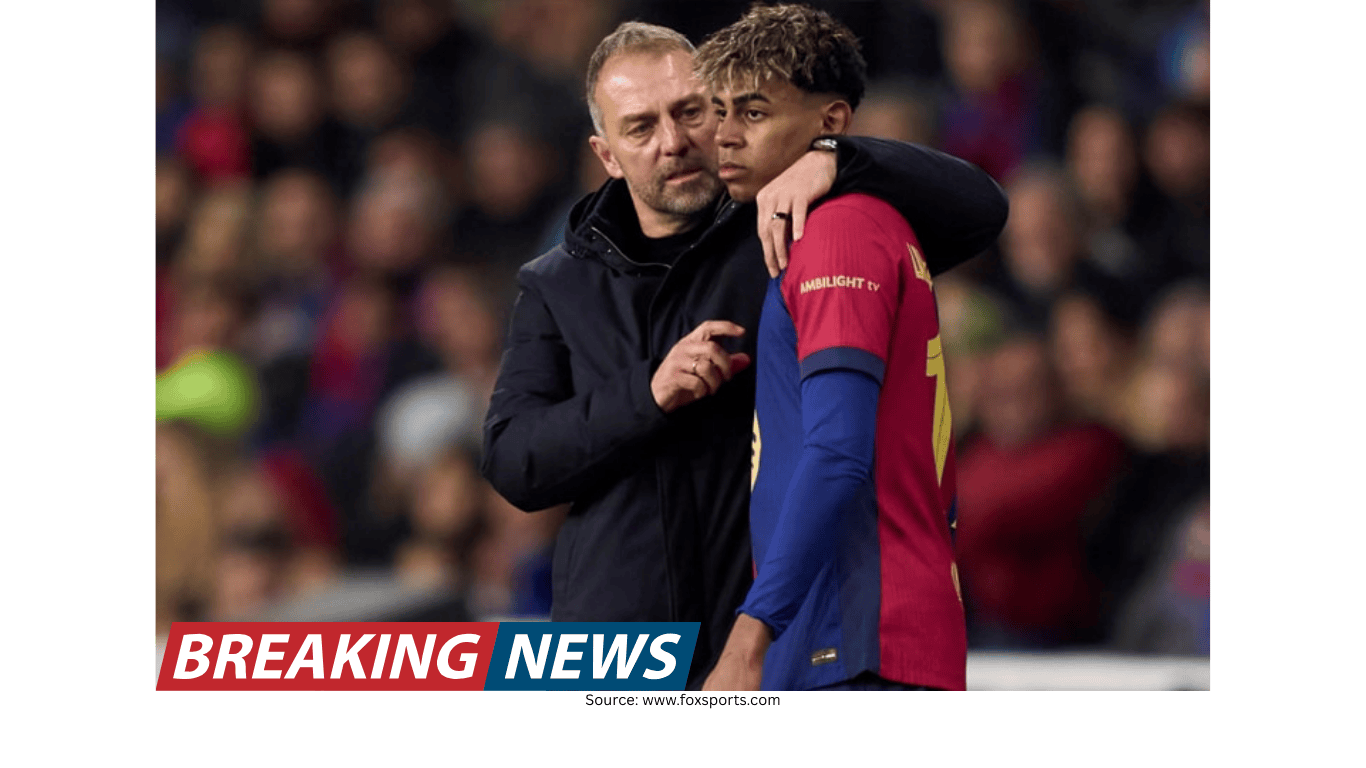
Flick pushes back against the “noise” around Barcelona decisions
Barcelona head coach Hansi Flick has responded to what he described as the “noise” surrounding his decision-making, after teenage winger Lamine Yamal appeared frustrated when being substituted in recent matches. Flick, who is set to reach the milestone of 100 games in charge this Saturday against Villarreal, acknowledged that managing a club of Barcelona’s stature comes with a level of scrutiny that can amplify even routine moments.
Speaking to the club’s official media channels, the German coach said he remains calm in the face of constant attention, arguing that the intense focus is a natural consequence of how closely the team is followed. In his view, reactions to substitutions and the public debate that follows are part of the environment at Barcelona, where every gesture can become a talking point.
Flick’s comments come after Yamal made headlines in a recent clash against Levante, when the young player reacted angrily to being withdrawn. Flick described the response as “normal,” and he has since returned to the topic to underline a broader point: at Barcelona, the spotlight is always on, and the narrative can quickly become louder than the football itself.
Why Yamal’s substitutions have become a talking point
Flick addressed the attention given to Yamal’s facial expressions and body language after he has been taken off. He suggested that the conversation around such moments can grow quickly, not necessarily because the incident is extraordinary, but because Barcelona’s profile ensures everything is magnified.
“In Barcelona, if a player or a coach says or does anything, it generates a lot of noise outside. That happens because everyone is watching Barca,” Flick explained. He added that early on, the tone around comments and interpretations could feel relentlessly negative, and he argued that this can distort the experience of following the sport.
For Flick, the key is not to deny the existence of scrutiny, but to reframe it. He emphasised that football should be enjoyed “in a positive way,” even while acknowledging that the external conversation can be overwhelming. His message was that the club’s scale and visibility inevitably create a louder echo around decisions that, in other contexts, might pass with little comment.
“Part of the game”: Flick defends his right to rotate
Beyond the immediate discussion of Yamal’s reaction, Flick used the moment to defend a coach’s need to manage minutes and rotate the squad. He stressed that when he substitutes Yamal, the focus often shifts away from tactical considerations and towards the player’s response, as if the reaction itself is the main event.
“Here at Barca we already know that if I substitute Lamine they look to see what he does, his reaction, when this is part of the game,” Flick said. He added that it is natural for a footballer to feel dissatisfied when leaving the pitch, particularly a player with ambition and competitive drive.
At the same time, Flick pointed to the wider responsibilities of managing a squad. He noted that substitutions also create opportunities for other players, and that those players “deserve to play.” In that sense, he framed rotation not as a slight against an individual, but as a necessary part of balancing the team’s needs across matches and competitions.
Flick’s stance was firm but not dismissive of the player’s emotions. He said he can understand Yamal’s frustration, while also making clear that acceptance of team decisions is part of professional football. The message was that ambition is welcome, but the collective must come first.
A young core shaped by La Masia, and a focus on unity
While the headlines have centred on individual moments, Flick spoke warmly about the group he is working with, highlighting the influence of La Masia and the unity he sees within the squad. He singled out Yamal alongside Pau Cubarsí and Marc Bernal as examples of young players who operate with a team-first mentality.
“The most important thing are the players and the coaches are here for them, to help them do better, to grow, so that there is competition on a daily basis,” Flick said. He described a culture of training at full intensity and carrying that same commitment into matches, with competition in training seen as a driver of improvement.
In Flick’s telling, what makes Barcelona different is the sense of being “a single unit.” He said he loves seeing a young team alongside experienced footballers, united by a desire to improve. His comments suggested that, for him, the club’s strength is not only tactical or technical, but cultural: the habit of working together and celebrating together.
One detail that stood out to Flick was how the players celebrate after success, including after a win. He said he was surprised to see them take a photo after a won match, and he interpreted it as a sign of their competitiveness and their enjoyment of performing well as a group. In his view, those small rituals reveal something about the squad’s identity and the way the players relate to one another.
Attention shifts to the Copa del Rey: a daunting deficit, but belief remains
Alongside the discussion of squad management, Flick is also looking ahead to a major challenge in the Copa del Rey. Barcelona face the task of overturning a 4-0 deficit against Atletico Madrid in the semi-finals, with the second leg still to come.
Flick did not downplay the scale of the challenge. He described it as difficult, but he insisted it is not impossible. His emphasis was on belief, effort, and the willingness to commit fully for the duration of the match, even if it extends beyond 90 minutes.
“It’s difficult, but not impossible. We have to believe, that’s the first thing,” he said. Flick added that Barcelona are “capable of coming back” if they give everything, framing the tie as a test of collective resolve and focus.
He also spoke about what is at stake emotionally: reaching the Cup final would be “almost a dream.” The language reflected a coach trying to balance realism with motivation, acknowledging the size of the deficit while encouraging his players and supporters to treat the second leg as an opportunity rather than a formality.
Camp Nou and the role of supporters in the comeback attempt
For Flick, the return leg is not just about tactics or selection; it is also about atmosphere. He argued that the environment at Camp Nou will be vital on March 3, and he called for a strong connection between the team and the fans.
“That’s why Camp Nou is so important,” he said, stressing that playing at home can change what feels possible. Flick spoke about the importance of supporters coming to enjoy the occasion, suggesting that positivity in the stands can help create the conditions for an extraordinary night.
He also referenced the team’s home form, saying they “haven’t lost” and want to continue that run. The message was clear: the stadium can be a factor, but only if there is a sense of unity between the pitch and the stands.
“When there is a connection between the team and fans it is great. We will need it on 3 March,” Flick said. He concluded with a simple rallying idea: “Everything is possible if we are together.”
Approaching 100 games: match-by-match focus with an eye on the future
As he prepares for his 100th game in charge, Flick indicated that while he prefers a match-by-match approach, planning does not stop at the next fixture. He suggested he is thinking about the longer term alongside sporting director Deco, even as the team competes across multiple fronts.
“I go match by match, day by day, which is the best thing you can do as a coach, follow the path,” Flick said. He added that Barcelona are competing in all competitions and want to win titles, reinforcing that immediate ambition remains central.
At the same time, he argued that it is important for the club to look ahead to next season and what comes next. Flick said he appreciates the work of Deco and his staff, and he emphasised the importance of feeling confidence and maintaining a positive outlook.
The combination of short-term focus and longer-term planning reflects the realities of managing at Barcelona, where results are demanded quickly but the club’s identity and structure also require sustained attention.
Laporta’s message: it matters how Barcelona win
Flick also reflected on the instructions he received when he arrived, recalling a message from president Joan Laporta about what Barcelona represents. The point, Flick said, was not solely about winning, but about doing so in a way that aligns with the club’s identity and style of play.
“You must know what FC Barcelona means, its identity, its style of play,” Flick recalled. He said Laporta told him on the first day that “you don’t just have to win, it also matters how you win,” and Flick added: “that is what I believe.”
In the context of the recent debate around substitutions and player reactions, the comment served as a reminder that Barcelona’s expectations go beyond the scoreboard. Flick’s public stance suggests he sees his job as balancing performance, development, and a particular footballing philosophy—while navigating the intense attention that comes with every decision.
Key points from Flick’s latest comments
- Flick said the scrutiny around Barcelona is inevitable and can create “noise” around routine decisions.
- He described Yamal’s frustration after substitutions as “normal,” while stressing that rotation is part of managing a squad.
- He emphasised that other players “deserve to play,” and that the collective must come before the individual.
- Flick praised the unity of a young group shaped by La Masia, highlighting daily competition and team mentality.
- He insisted Barcelona can still believe in a Copa del Rey comeback against Atletico Madrid despite a 4-0 deficit.
- He called for a strong connection between fans and team at Camp Nou on March 3, saying “Everything is possible if we are together.”
- Approaching his 100th match, Flick said he is focused on the next game while also planning ahead with Deco.
- He reiterated that Barcelona’s identity matters, recalling Laporta’s view that it is not only about winning, but how the team wins.
With a milestone match approaching and major fixtures ahead, Flick’s message was consistent: the spotlight will remain intense, but the priorities are clear—team unity, belief in difficult moments, and staying aligned with the club’s identity even when every decision is dissected.