
Gary Neville warns Arsenal of a tense run-in but backs them to finish ahead of Manchester City
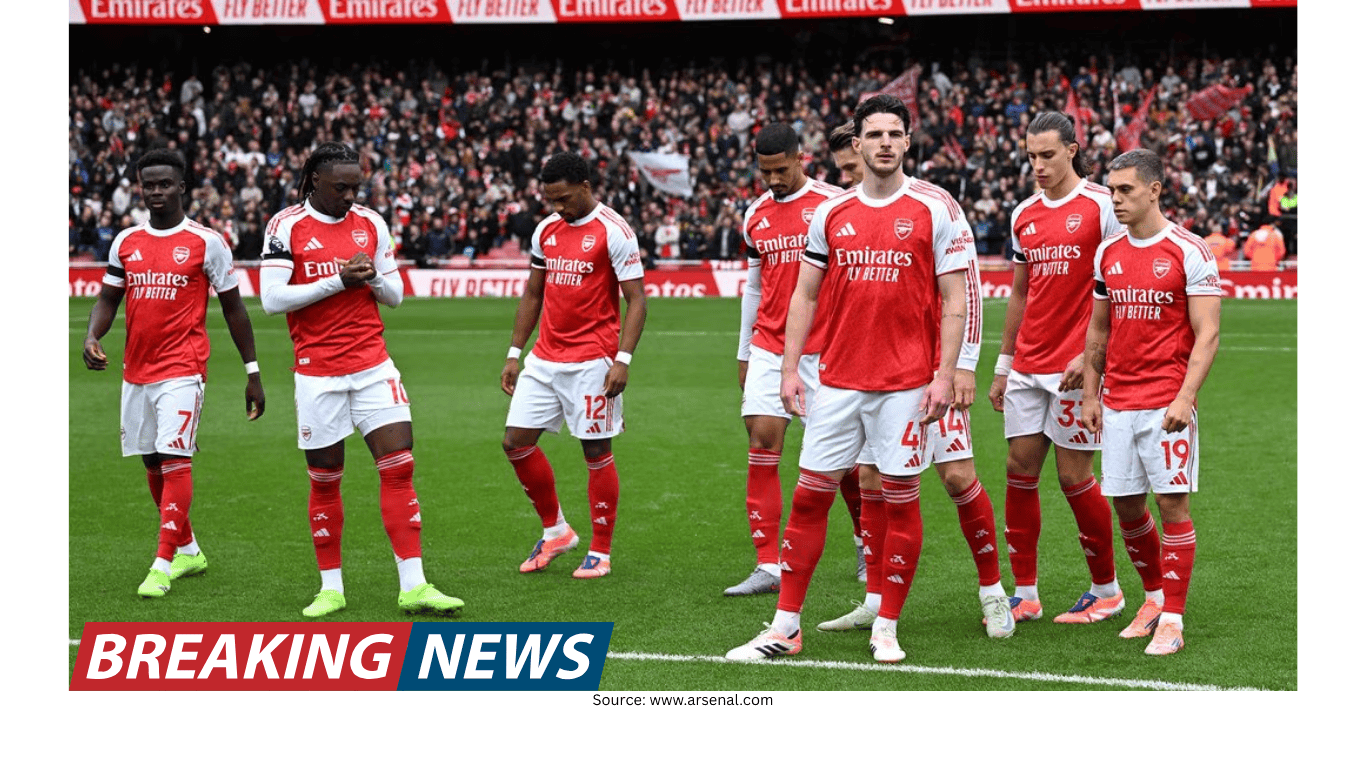
Neville’s verdict: Arsenal can get there, but it will not feel comfortable
Gary Neville has backed Arsenal to win the Premier League title ahead of Manchester City, while warning that the final weeks of the season could be an anxious experience for supporters. His assessment is that Arsenal have enough to stay in front, but that the run-in is likely to be emotionally draining, with tight margins, pressure moments and the constant presence of a proven challenger behind them.
Neville described the closing stretch as “10 more weeks of pain” for Arsenal fans, not as a prediction of collapse but as a reflection of how tense a title race can become when every match carries consequences. In his view, the experience of being involved in difficult campaigns over recent seasons has helped Arsenal develop the resilience needed for what comes next.
That combination—belief in Arsenal’s ability to finish the job, paired with a warning about how hard it can be to actually do it—sums up the mood around the leaders as the season enters its decisive phase.
Arsenal restore a five-point lead, but City’s game in hand keeps the pressure on
Arsenal restored a five-point lead at the top of the Premier League with a 2-1 win over Chelsea, coming a day after Manchester City edged Leeds. The table position offers encouragement for Mikel Arteta’s side, but it does not remove the sense of jeopardy. City have a game in hand which could reduce the gap to two points, meaning Arsenal’s advantage is significant but far from decisive.
The recent sequence of results has been framed as a response to adversity. After a damaging two-goal collapse against Wolves, Arsenal have navigated back-to-back London derbies to keep City at arm’s length. For Neville, that recovery matters because it suggests Arsenal can absorb setbacks and still respond with the kind of performances required in a title race.
With nine league games remaining, the basic arithmetic is clear: Arsenal are still in control of their position, but the margin for error looks slim, especially with City capable of applying pressure through consistent results.
Resilience after setbacks: why Neville thinks Arsenal’s mindset has changed
Neville praised Arsenal’s reaction to the late heartbreak at Molineux and argued that the team’s resilience could be the deciding factor in the final nine games. He pointed to a blend of qualities—technical ability, physical strength, and the hard-earned lessons of previous seasons—as reasons to believe Arsenal can withstand the tension of the run-in.
In Neville’s view, Arsenal have been shaped by the experience of “the last three years of losing it,” and that history can be useful rather than damaging if it is applied correctly. The challenge, as he framed it, is to accept that the closing weeks will be difficult and to manage the anxiety that inevitably builds when the finish line is in sight.
He also suggested that supporters should try to “enjoy the thrill of it” even if it feels uncomfortable. That is not a call for complacency; it is an acknowledgement that the emotional weight of a title race can be part of what makes it meaningful.
The long wait and the psychological backdrop around Arsenal
One of the themes Neville highlighted is the weight of history. He referenced the fact that Arsenal have not won the league for 22 years, a statistic that is often repeated whenever the club is discussed in the context of a title challenge. Neville’s point was that Arsenal have to find a way to move beyond that narrative rather than carry it into every match.
The pressure does not only come from opponents; it can also come from expectation, memory and constant comparison to past achievements. Neville’s argument was that Arsenal must “get rid of that” and focus on the practical task in front of them: winning enough matches to stay ahead of City.
For a team leading the league, the psychological test is not only about handling one bad result, but about managing the cumulative effect of week-by-week tension. It is in that context that Neville’s “pain” line lands—not as drama, but as a description of the mental strain that can define a close finish.
The City factor: chasing a proven winner
Neville identified a familiar concern for any team trying to beat Manchester City over a full run-in: the presence of Pep Guardiola’s side, described as a “machine” that has won titles. Even with Arsenal in front, the knowledge that City have been in these situations before can influence how every moment is perceived.
He noted that one of the worries—aside from injuries and the number of games—is simply being pursued by a team that has repeatedly delivered under pressure. That does not mean Arsenal cannot win; Neville still expects them to edge it. But it does underline why the margin for mistakes can feel so small when the challenger is so relentless.
Neville also raised a question about leadership inside the dressing room: who provides composure, who “settles everyone down,” and who helps the group manage the emotional swings of a title race. He referenced how teams with “experienced winners” can use that know-how in moments when anxiety threatens to take over.
Experience in the squad and the search for calm in key moments
Within Neville’s analysis, there is a distinction between having winners in the squad and having the kind of figure who can carry others through the final stretch. He mentioned that Gabriel Jesus has won the Premier League, but suggested he does not look like the type to “get the players over the line on his own.” The point was not to diminish Jesus’ contribution, but to stress that title run-ins often require multiple leaders and calm decision-makers.
The question of composure is not theoretical. In the final weeks, games can turn on a single incident: a late chance, a set piece, a moment of uncertainty. Neville’s view is that Arsenal will need both quality and emotional control, especially when the atmosphere tightens and the stakes are highest.
Four fronts and a packed calendar: Arteta’s balancing act
Neville’s biggest practical concern was not about Arsenal’s ability, but about the volume of matches. He pointed to the demands of competing on multiple fronts, with Arsenal still in contention across competitions and facing a potential schedule of 21 games in 87 days if they reach the final of both the FA Cup and Champions League.
That kind of workload changes the nature of the title race. It introduces new risks—fatigue, injuries, and the difficulty of keeping performance levels high while rotating the squad. Neville argued that Arteta’s biggest challenge will be managing those competing priorities without losing momentum in the league.
In a season where every point matters, the smallest drop in intensity can have consequences. Neville’s framing was that Arsenal must navigate not only opponents, but also the demands of recovery, selection and maintaining sharpness.
Squad depth and rotation: the decisions that could define the season
Arteta has strengthened his squad depth this season with signings such as Piero Hincapie, Martin Zubimendi and Viktor Gyokeres. Even with those additions, Neville believes the manager still faces a significant balancing act as he tries to end the long wait for a league title.
Neville’s view is that Arsenal cannot simply sacrifice major competitions. As he put it, “You can’t throw away a Champions League, you can’t throw away a Carabao Cup final,” and that reality shapes how rotation can be approached. The Carabao Cup final is a one-off game, he argued, and therefore demands the best available team. The Champions League also requires the strongest selection, and the Premier League, of course, remains the central objective.
That leaves the FA Cup as the competition where calculated risk may be most realistic. Neville suggested that Arsenal may need to trust their “second XI” deep into the tournament, at least up to the semi-final stage, in order to protect the squad’s physical condition for the biggest matches elsewhere.
The FA Cup as the likely pressure valve
Neville described the FA Cup as the competition that might “fall by the wayside,” not as disrespect, but as a strategic necessity when the calendar becomes crowded. His argument is rooted in the reality of squad management: if Arsenal are to compete strongly in the Premier League, Champions League and a cup final, then somewhere the load has to be reduced.
He noted Arsenal have Mansfield in the fifth round and suggested they would probably get through that tie, while implying that the later rounds could become the point where rotation and risk-taking are most likely.
It is a pragmatic reading of the situation. The more matches Arsenal play, the more every selection decision becomes a trade-off between immediate progress and long-term freshness.
Arteta on the fine margins: “my heart almost stopped”
Arteta’s own comments after the Chelsea win offered a window into how tense matches can become at this stage of the season. He said his “heart almost stopped” during the nerve-jangling finale, highlighting a late moment when David Raya pushed a cross around the post.
Arteta described the save as coming from an “unbelievable shot” and said Raya’s intervention “brought it back to life.” He also acknowledged that Arsenal were not producing the dominance and sequences of play they wanted, even against 10 men, and that the team had to “navigate through that.”
His summary was simple: “Everybody’s suffering because the margins are so small.” It is a manager’s acknowledgement that control is not always possible, and that winning sometimes requires surviving difficult spells rather than playing perfectly.
Set-piece strength: a record-equalling weapon in the title race
One of the standout details from Arsenal’s win was the manner of their decisive goal. Jurrien Timber’s 66th-minute winner was Arsenal’s 16th goal from a corner this season, equalling a Premier League record for a single campaign shared by Oldham and West Brom, with nine games still to play.
Set pieces can become even more valuable in the final weeks, when open play can be tense and opponents may take fewer risks. Arsenal’s ability to score from corners has given them a reliable route to goals, and the record-equalling tally underlines how consistently they have turned those situations into points.
The win also continued a pattern from the previous week. Arsenal were drawing at half-time again, echoing the north London derby against Spurs, which ended 4-1. In both cases, Arsenal found a way to shift the match after the break.
Half-time belief and second-half responses
Arteta explained that he reminded the players at half-time that they had been in the same situation against Tottenham seven days earlier. The message was not simply motivational; it was practical: difficult patches are part of the process, and the team must “earn the right to win the game.”
According to Arteta, the players responded by referencing what happened in the second half of the Spurs match and committing to doing it again. That kind of shared memory—recent evidence that they can turn games in their favour—can be important in a run-in where confidence and composure are constantly tested.
For Arsenal, the challenge is to keep producing those responses while the pressure increases and the schedule intensifies. For City, the task is to keep winning and force the pace. Neville’s prediction is that Arsenal will ultimately hold their nerve, but the route to the finish line, for players and fans alike, is unlikely to be smooth.
Key themes shaping the run-in
Arsenal’s advantage is real but vulnerable: a five-point lead is valuable, yet City’s game in hand keeps the race tight.
Resilience after setbacks matters: Arsenal’s response to a painful collapse has been followed by derby wins that stabilised their position.
Schedule pressure could be decisive: competing across multiple competitions increases the risk of fatigue and injuries.
Rotation requires strategy: Neville believes Arsenal may need to take calculated risks in the FA Cup while prioritising the league, Champions League and a cup final.
Set pieces are a major strength: Arsenal’s corner goals have reached a record-equalling level with the season still to play out.
As the final weeks unfold, Neville’s message is straightforward: Arsenal have put themselves in position to win the title, and he expects them to do it. But the closing stretch will likely test every part of the club—tactics, squad depth, mentality and nerve—because that is what happens when the margin between success and regret becomes so thin.