
England held 1-1 by Uruguay as Ben White’s return dominates a flat Wembley friendly
White’s comeback becomes the story of the night
England’s 1-1 friendly draw with Uruguay at Wembley was framed as an opportunity: a chance for players on the fringes to press their case for future selection and, in the words around the camp, to treat the match as an audition for a World Cup place. Instead, the evening became dominated by one figure and one storyline. Ben White, back in the England squad after a long international absence, scored his first senior international goal and then conceded a stoppage-time penalty that allowed Uruguay to equalise.
The reaction from parts of the crowd was as striking as the on-pitch swings. White was booed when he entered as a second-half substitute. When he scored, the initial cheers that greeted the goal were followed by jeers once his name was announced in the stadium. The volume of the boos made the message unmistakable: a portion of the Wembley crowd was not prepared to move on from the circumstances that surrounded his departure from the England set-up during the 2022 World Cup.
England ultimately left the pitch to audible dissatisfaction aimed not only at the late concession, but at a performance that struggled to generate sustained momentum. On a night intended to offer clarity, Thomas Tuchel instead appeared to be left with an uncomfortable mix of individual moments, contentious refereeing decisions and a broader sense that the team did not fully convince.
How the match unfolded at Wembley
The game, played in front of an attendance of 80,581, was short on rhythm for long spells. England found it difficult to create clear openings and the contest was described as flat and lacking in purpose, with the home side failing to build the kind of pressure that typically lifts Wembley into full voice.
White’s goal arrived late, on 81 minutes, and came from what was described as a messy set-piece. The finish itself was simple: a tap-in at the back post that put England ahead and seemed, briefly, to have provided the breakthrough needed to settle a tense and cautious evening.
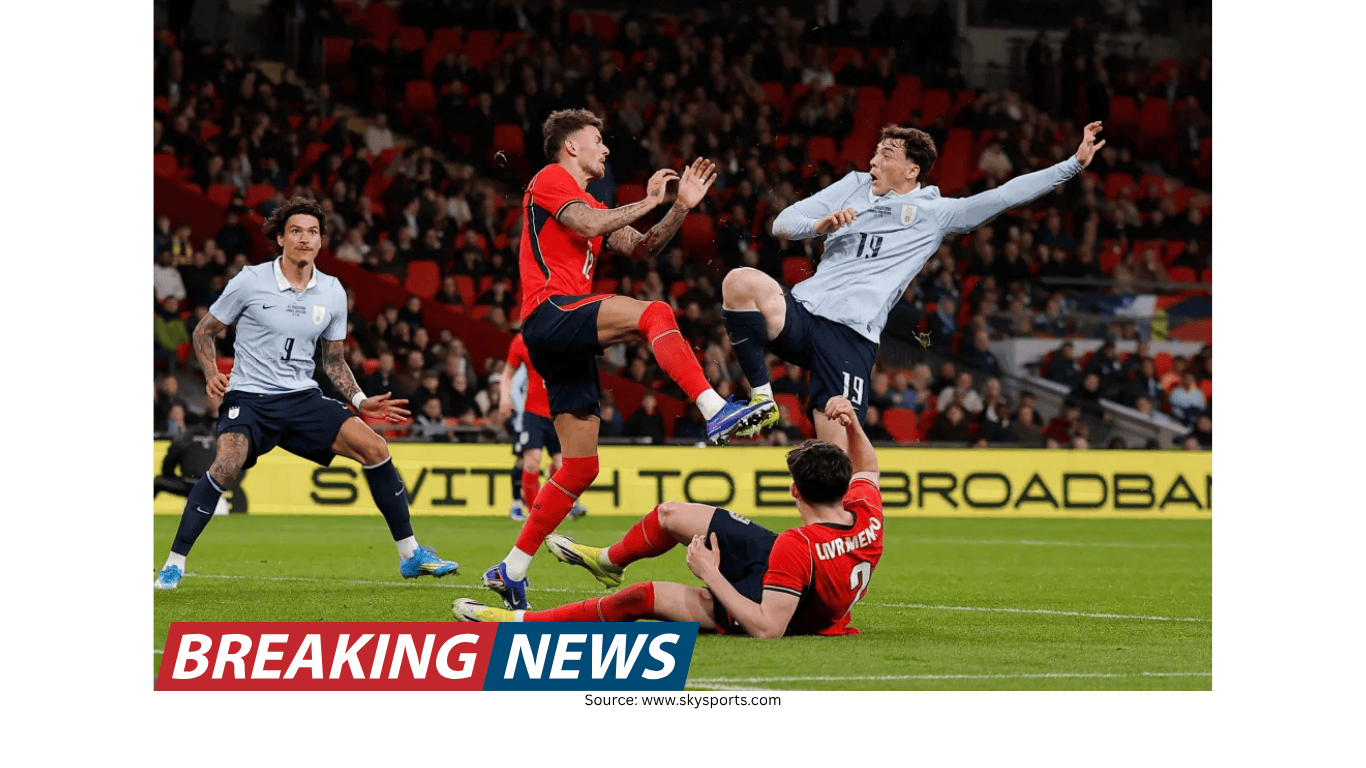
However, the match turned again deep into stoppage time. Following a VAR check, White was judged to have fouled Federico Viñas in a 50-50 challenge. The contact was described as unlucky, with White’s outstretched boot arriving a fraction of a second after the forward went for the ball, but the decision stood. Fede Valverde then converted the resulting penalty in the 94th minute to make it 1-1 and deny England a win that, for all its imperfections, would have offered a positive end point.
The crowd’s verdict and the weight of recent history
White’s presence in the squad had been controversial even before kick-off. He was called up as a replacement for Jarell Quansah, and his return to international duty came with an acknowledgement from Tuchel that the defender would need to “clear the air” with team-mates after leaving the 2022 World Cup early due to personal reasons. White later rejected a subsequent call-up under Gareth Southgate following a disagreement with then assistant Steve Holland.
Tuchel said he did not hear the booing during the match because he was focused on substitutions, but he was aware of it afterwards. He expressed disappointment at the mixed reception, emphasising the need to protect players and suggesting White would have to take it “on the chin”. The England coach also indicated he hoped White could move forward, describing him as ready to “write some new chapters”.
Yet the atmosphere inside Wembley suggested that the chapter England fans were reading was still heavily influenced by what came before. White’s goal, normally a moment that might have softened perceptions, instead became another flashpoint. The sequence—booed on arrival, booed after scoring, then involved in the decisive late incident—ensured he could not escape attention.
Late penalty decision and officiating controversy
The penalty that brought Uruguay level was not the only moment to place the officials under scrutiny. The match featured several contentious incidents, including a bad tackle by Ronald Araújo on Phil Foden that left the England player limping. Araújo escaped a red card, and the challenge was not punished in the way England’s staff appeared to expect. Noni Madueke was also forced off after a heavy first-half challenge, another incident that drew frustration.
There was also confusion surrounding Manuel Ugarte and what appeared to be two yellow cards without a dismissal. Harry Maguire later offered an explanation of what England had been told: that Ugarte had been shown two yellow cards and the second was rescinded, before further clarification suggested the first booking had actually been intended for José María Giménez. The net effect, as Maguire put it, was that rather than two yellow cards, Ugarte ended up with no yellow cards at all.
Tuchel was blunt in his assessment of the officiating. He described the penalty as “very soft”, acknowledging contact but arguing it was obvious what the striker was trying to do. He also questioned the consistency of VAR involvement, noting that other incidents—such as the challenges on Foden and Madueke—did not appear to receive the same level of review. In his view, it was “a bad day at the office” for the officials.
From England’s perspective, the frustration was twofold: the sense that significant incidents were overlooked, and the reality that the one major review late in the match went against them. Even so, the late decision did not fully explain why England struggled to impose themselves earlier. The broader performance left the impression of a team still searching for cohesion and edge.
Individual performances: few seize the moment
With places up for grabs, the match offered a platform for players to push their case. The verdict, however, was that few could claim to have truly taken their chance. England’s lack of creativity and cutting edge meant that several performances blended into the wider flatness of the contest.
There were positives. James Garner’s debut was described as a plus—neat, unfussy, and reflective of his all-round attributes. Harry Maguire, returning after a lengthy absence from the international scene, looked assured and even wore the captain’s armband for the final 30 minutes. He was credited with a “magnificent block” deep into injury time that helped prevent England from losing.
Phil Foden, by contrast, again failed to deliver in an England shirt, despite being involved and showing moments of threat before being affected by a heavy challenge. Madueke’s night ended early due to the first-half incident that forced him off, limiting his opportunity to influence proceedings.
Up front, the match contained a moment that may linger. Dominic Calvert-Lewin, introduced as a substitute striker, endured what was described as a painful miss: a miscued header with the goal gaping. In a game where clear chances were at a premium, such an opportunity felt significant.
There was also discussion of the contrasting impressions made by England’s forward options. Dominic Solanke was described as bright and busy, but with no chances presented to him to score. Calvert-Lewin, meanwhile, did receive a major opening and did not take it—an outcome that could weigh heavily when selection decisions arrive.
White’s decisive involvement: a goal, then a costly moment
White’s night contained the type of extremes that can define reputations. His goal should have been a personal milestone: his first for England, scored at Wembley. Instead, it was accompanied by a hostile soundtrack that undercut the celebration and emphasised the tension around his return.
Then came the late penalty incident. The description of the challenge suggests it was not reckless, but mistimed. In international football, especially with VAR in operation, such fine margins can become decisive. Valverde’s conversion ensured White’s return would be remembered not only for the goal, but for the moment England’s lead slipped away.
For Tuchel, the episode presented a difficult balance. On one hand, he spoke about protecting players and wanting White to move forward. On the other, he must now manage a situation where a section of the fanbase has expressed clear disapproval, and where the player’s first match back included an error—however harshly judged—that directly affected the result.
Tuchel’s broader assessment: tactical game, limited freedom
Despite the frustration at the end, Tuchel offered a measured view of his team’s approach. He said he liked the positivity, attitude and performance, describing the match as “very tactical” and noting that the team were ready to adapt to the questions asked of them.
He also suggested that England’s best moments did not bring the reward that might have opened the game up. In his assessment, the team were “very good” in certain phases but did not get the goal that would have provided more freedom. Without that boost, England kept trying but never fully took control.
That perspective sits alongside the more critical tone heard from the stands and reflected in the post-match mood. The draw, secured by a late penalty, made it harder to focus on the tactical learning points. Instead, the debate quickly returned to selection, mentality and whether enough players are forcing their way into Tuchel’s thinking.
What the draw means for England’s selection picture
The friendly was presented as a key evaluation moment, and the outcome did little to simplify England’s decisions. The sense that “more questions than answers” remain reflects a squad still in flux, with Tuchel trying to establish clarity about who can step up in the matches that matter.
In that context, Maguire’s assured display stood out as a tangible positive. Garner’s calm debut also offered encouragement. But England’s inability to create and finish chances consistently, combined with the lack of standout attacking performances, left the wider picture unresolved.
White’s situation adds another layer. His return ended his self-imposed international exile after Tuchel took charge, but the crowd reaction suggested that public opinion is divided. The match did not provide a clean reset; it delivered a complicated, high-profile reminder of how quickly narratives can dominate international football.
Next fixtures and the remaining window to impress
England’s schedule offers little time for lingering on this draw. They host Japan in another friendly at Wembley on Tuesday, with a 7.45pm kick-off. It is described as the final chance for Tuchel to assess his players on the international stage before he announces his World Cup squad at the end of the season.
After that, England have World Cup warm-up matches against New Zealand and Costa Rica, before their tournament opener against Croatia on June 17. The pathway is clear, but the hierarchy within the squad remains open in several positions.
For players who did not fully seize their opportunity against Uruguay, the next match represents a final opportunity to change the conversation. For White, it is a chance to move beyond a turbulent return and to focus on performance rather than reaction—though Wembley made clear that, for now, the two may remain closely linked.
Key moments at a glance
- Ben White returned to the England team and was booed by sections of the Wembley crowd.
- White scored his first England goal with a tap-in at the back post on 81 minutes.
- After a VAR check, White was penalised for a foul on Federico Viñas in stoppage time.
- Fede Valverde scored the 94th-minute penalty to make it 1-1.
- England expressed strong frustration with several refereeing decisions, including incidents involving Phil Foden and Noni Madueke.
- Harry Maguire returned to the side, wore the captain’s armband late on, and made a crucial block in injury time.