
MLB’s Automated Ball-Strike Challenge System Debuts as Yankees’ Jose Caballero Loses First Appeal
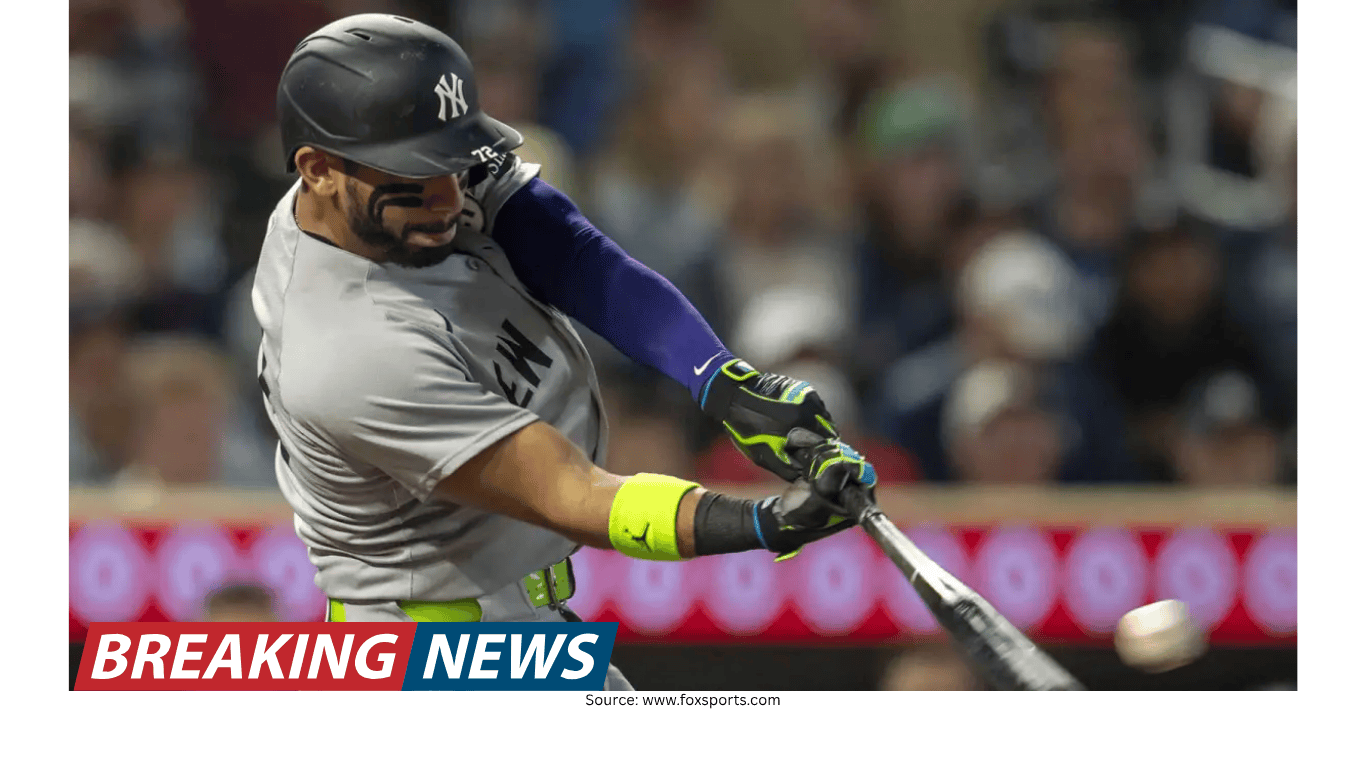
A new era for ball-strike decisions starts with a single pitch
Major League Baseball’s so-called “robot umpire” era took a meaningful step forward on opening night, not with a dramatic reversal but with a confirmation. In the Yankees’ 7-0 season-opening win over the San Francisco Giants on Wednesday night, New York’s Jose Caballero became the first player to challenge a ball-strike call under the league’s Automated Ball-Strike System, and he lost.
The moment arrived in the fourth inning when Giants right-hander Logan Webb opened the frame with a 90.7 mph sinker that clipped the upper, inner corner. Home plate umpire Bill Miller—an experienced major league umpire who has been in the league since 1997—ruled it a strike. Caballero immediately initiated the appeal by tapping his helmet, triggering the review process.
Within seconds, the decision moved from the plate to the technology. The system, powered by 12 Hawk-Eye cameras, evaluated the pitch location and upheld Miller’s call. Fans in the ballpark saw the result in a graphic displayed on the stadium scoreboard, providing a clear, public confirmation that the original strike call would stand.
How the first challenge unfolded in real time
Caballero’s challenge came with the Yankees already in control. New York led 5-0 at the time, having built its advantage in a decisive second inning. Caballero had been part of that early surge, driving in the game’s first run with an RBI single during a five-run rally against Webb.
That context matters because it shows the challenge system isn’t reserved only for late-game, high-leverage scenarios. Even with a comfortable lead, the Yankees’ hitter used the mechanism at the first opportunity—suggesting that players and teams may treat challenges as routine tools rather than emergency options.
For Webb, the inning carried its own milestone. During the fourth, he recorded the 1,000th strikeout of his career. The first challenge of the season therefore arrived in a moment that combined a new league initiative with a traditional pitcher benchmark, underscoring how MLB is attempting to blend technological assistance with the sport’s long-established rhythms.
What the automated system is—and what it is not
The Automated Ball-Strike System used in this game is not presented as a replacement for umpires on every pitch. Instead, it functions as a challenge-based tool that can be invoked by a player. In this first test of the regular season, the call on the field remained the starting point, and the technology served as the adjudicator only after a challenge was made.
In Caballero’s case, the technology did not introduce controversy so much as it delivered a definitive answer. The cameras supported the human call, and the scoreboard graphic made that verdict visible to everyone in the stadium at the same time.
MLB has been moving toward this moment for years. The automated system has been tested in the minor leagues since 2019. It was also used during major league spring training in both 2025 and 2026, giving clubs repeated opportunities to experience the process, discuss strategy, and get comfortable with how quickly a challenge can reshape an at-bat.
Early reactions: excitement, preparation, and a learning curve
Before Wednesday’s opener, Yankees manager Aaron Boone spoke positively about the new system and emphasized the importance of preparation. His comments suggested that, for teams, success with the challenge process will depend not only on understanding the technology but also on internal communication—who challenges, when, and based on what information.
Boone described extensive dialogue around the system and said he had invested significant time in it. He also explained that he had held meetings with position players and catchers near the end of spring training to review different challenge situations and to offer feedback on decision-making.
In Boone’s view, a key part of adopting the system is accountability. He said he had been direct during spring training when he believed a challenge was “really good” and equally direct when he thought one was “terrible.” That kind of candor points to a new layer of coaching: evaluating not just swings and pitches, but the judgment involved in deploying a limited in-game mechanism.
Boone also framed the transition as a work in progress for everyone involved. He called it a learning process and said he expects his team to be good at it, while also acknowledging that the approach will continue to evolve.
Strategy implications: the challenge becomes part of team identity
Even from a single, early-season example, it is clear that the automated challenge system will influence how teams think about at-bats. Boone’s focus on meetings, feedback, and expectations indicates that clubs may treat challenges as a skill that can be practiced and improved—similar to baserunning decisions, defensive positioning, or pitch selection.
Because the system is challenge-based, it creates a decision point that did not exist in the same way before. Players must weigh whether to accept the umpire’s call and move on or to initiate a review. That choice can have ripple effects: it can affect the count, alter pitcher and hitter behavior, and potentially change the emotional temperature of an inning.
Caballero’s unsuccessful appeal is also instructive. The first public example ended in confirmation of the umpire’s strike call, which may reinforce that challenges are not guaranteed to deliver favorable outcomes. Teams will likely need to develop discipline, using challenges when they believe the odds of reversal are strong rather than as a reflexive response to frustration.
Technology doesn’t eliminate arguments—some say they’ll continue anyway
While the automated system is designed to bring clarity, it may not remove all conflict from the sport. The league’s own testing period has already produced a telling reaction: some managers have said they will still find ways to argue and get ejected.
That comment highlights a reality of professional baseball. Disputes over calls are not purely about accuracy; they can be about momentum, emotion, and protecting players. Even with technology available to confirm or overturn specific ball-strike calls, the human dynamics between dugouts and umpires may continue in other forms.
In that sense, the system may change the shape of conflict rather than eliminate it. The ball-strike decision itself may become more objective when challenged, but the broader competitive environment—where managers and players react to perceived slights, inconsistency, or pressure moments—will still exist.
A new manager’s perspective: remembering the “robots” are part of the night
Across the field, the Giants’ new manager Tony Vitello offered a candid glimpse into how unusual this transition can feel, even for seasoned baseball minds. Vitello arrived in San Francisco from the University of Tennessee and has no professional experience as a player or coach, making his first major league season a significant shift in environment.
Earlier Wednesday, Vitello said he had to remind himself that the automated system might take over at times. He described looking up the umpiring crew and seeing that a robot umpire would be part of the night, prompting a brief moment of surprise. His reaction—he said he “kind of freaked out” for a millisecond—captured the novelty of the change.
Vitello’s comments also illustrate how the system is not just a tool for players at the plate. It is something that coaches, managers, and entire organizations must mentally incorporate into their routines. From lineup planning to game management, the knowledge that a ball-strike call can be challenged and reviewed introduces a new variable.
What fans saw: a transparent ruling displayed in the stadium
One of the most immediate differences with the Automated Ball-Strike System is how decisions can be communicated. In this first challenge, the ruling was not confined to a quiet conversation among officials. The result appeared on the scoreboard as a graphic, letting the crowd see that the cameras supported the strike call.
That kind of transparency can influence how fans experience the game. Instead of relying solely on replays from television broadcasts or speculation from the stands, the in-venue display provides a standardized visual explanation of what the system determined.
For the sport, that visibility may be part of the point. If MLB is going to introduce technology into one of the game’s most debated areas—the strike zone—it may also want the process to be understandable in the moment, not only after the fact.
Opening-night snapshot: one challenge, one confirmation, many questions ahead
It is too early to draw sweeping conclusions from a single pitch, but the first challenge of the season offered a compact preview of what this system could mean. The process was quick: a tap of the helmet, a camera-based review, and a public ruling. The outcome was definitive: the call stood.
It also showed that adoption will be cultural as much as technical. Boone’s emphasis on preparation and feedback suggests teams will treat challenge decisions as part of performance. Vitello’s momentary surprise suggests that even experienced baseball leaders may need time to adjust to the idea that technology can step in, even briefly, during the most traditional parts of the sport.
Meanwhile, the acknowledgment that some managers will still argue indicates that the system will not erase the game’s emotional edge. Baseball is evolving, but it is not becoming a different sport overnight.
Key details from the debut challenge
- The first ball-strike challenge of the season was made by Yankees hitter Jose Caballero.
- The challenged pitch was a 90.7 mph sinker from Giants right-hander Logan Webb to start the fourth inning.
- Home plate umpire Bill Miller called the pitch a strike; the Automated Ball-Strike System upheld the call.
- The system uses 12 Hawk-Eye cameras, and the ruling was shown on the stadium scoreboard.
- The automated system has been tested in the minor leagues since 2019 and used in major league spring training in 2025 and 2026.
- Yankees manager Aaron Boone voiced support for the system and described extensive team discussions about challenge decisions.
- Giants manager Tony Vitello, new to the professional ranks, noted the novelty of seeing the “robot umpire” mentioned alongside the umpiring crew.
What comes next
The first challenge did not overturn a call, and it did not produce chaos. It did, however, mark a clear start: the automated ball-strike challenge system is now part of the regular-season fabric. As the season continues, teams will refine how they use it, players will learn when to trust their instincts, and fans will get more examples of how the technology behaves under different conditions.
For now, the opening-night record is simple. The first challenge was made. The cameras ruled. The strike call stayed. And baseball moved forward—one pitch at a time.