
Tom Izzo Stands Firm Behind Coen Carr as Michigan State Seeks More Than Highlight Dunks
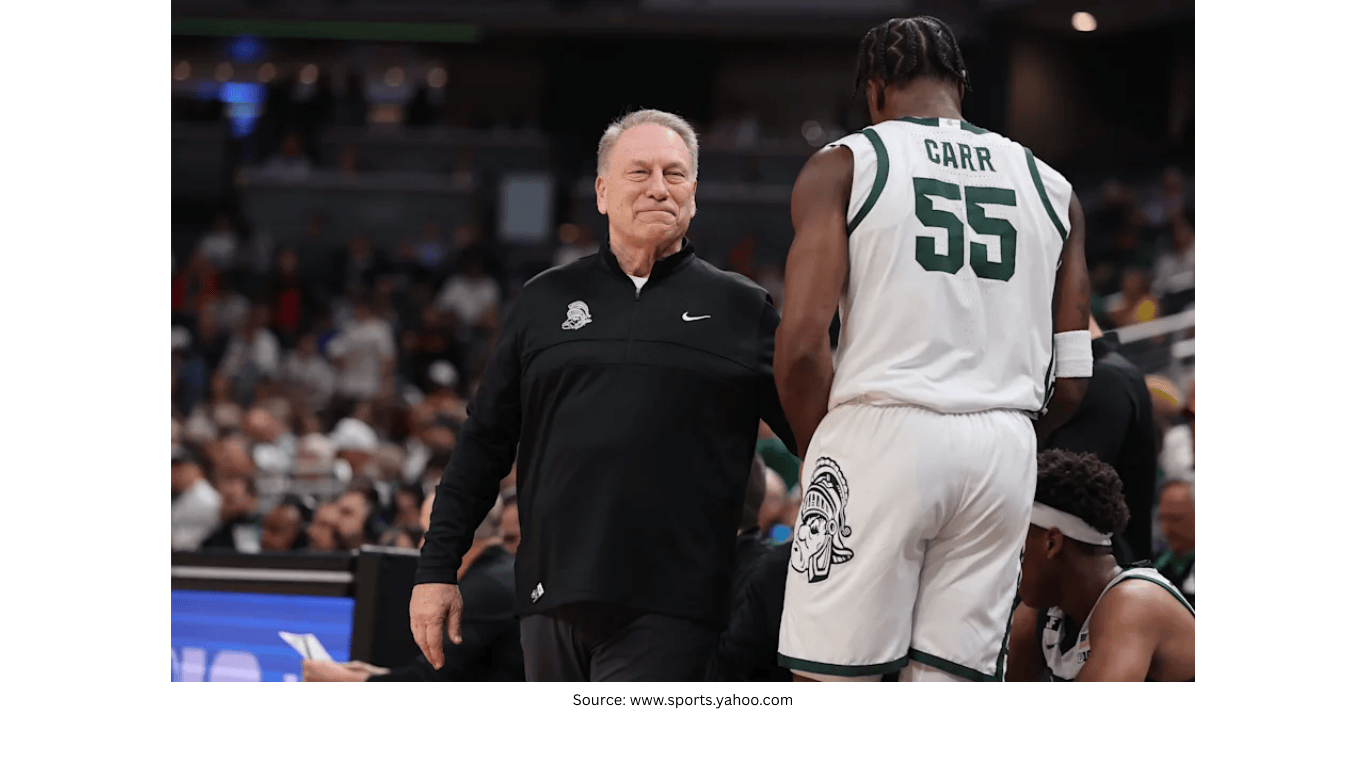
A highlight-reel talent facing a new set of expectations
Michigan State junior Coen Carr has built a reputation that is hard to ignore. He is described as the most electrifying dunker in college basketball, a player whose athleticism can turn an ordinary possession into an instant moment that fans replay and share. That kind of explosiveness creates energy for a team and can shift the mood inside an arena in seconds.
As Michigan State’s season moves deeper into January, though, the Spartans are asking for more than the spectacular. Carr’s ability to finish above the rim is a defining trait, but the demands of a long season often require consistency and production that go beyond any single skill. For Carr, that has meant navigating a month where his offensive rhythm has not matched the standard he set earlier.
The conversation around Carr is not about whether he can make unforgettable plays. It is about how Michigan State can get the most complete version of his game at a point in the season when every possession matters more, and when opponents are increasingly prepared to limit what he does best.
From December production to a January dip
Carr’s recent scoring numbers illustrate the shift. After averaging nearly 14 points per game in December, he has struggled to find consistent offensive flow in January. This month he has been scoring eight points per contest, and he has finished in single digits in four of his last five games.
Those totals stand out because they contrast sharply with what he showed just weeks earlier. When a player moves from near-14 points per game to eight, it naturally raises questions about how defenses are playing him, how he is responding, and what adjustments a team might need to make to help him regain comfort.
The most recent example came in Michigan State’s 80-63 win over Washington. Carr scored six points on 2-of-4 shooting. In isolation, that line might not tell the full story of his night, but it fits the broader pattern of a player who has not been able to consistently translate his athletic advantages into steady scoring output this month.
Izzo addresses confidence and responsibility
After the win over Washington, Michigan State head coach Tom Izzo was asked whether Carr’s offensive dip had raised concerns about his confidence. Izzo’s response framed the situation less as a question of belief and more as a reflection of work, planning, and the ways opponents are choosing to defend Carr.
“I feel for Coen because I know how hard he’s worked on it,” Izzo said. “There are a couple of things we’re going to work a little harder on when teams play him like that, and that’s going to be on me.”
Izzo’s comments point to two realities that often define a season: players can put in significant work and still face stretches where results lag behind effort, and coaches must adapt when opponents adjust. The phrase “when teams play him like that” suggests Carr is encountering specific defensive approaches that are limiting his opportunities or disrupting his rhythm, and Izzo indicated that responding to those tactics is part of the staff’s responsibility.
In that context, the focus is not only on Carr making shots, but on Michigan State identifying the best ways to put him in positions where he can succeed. Izzo’s remarks also underline that Carr’s current slump is not being treated as a simple matter of individual performance, but as a shared problem the team intends to solve.
Impact beyond scoring: defense, effort, and attitude
While Carr’s offense has lagged, his impact elsewhere has remained significant. In the win over Washington, he played a key role in holding the Huskies to just 16% shooting from 3-point range. He also helped spark a defensive effort that forced 12 turnovers.
Those details matter because they show how Carr can influence winning even when his scoring is down. Defense is often less visible than a dunk, but it can be just as decisive. Limiting a team’s 3-point shooting to 16% is a major accomplishment, and forcing 12 turnovers reflects a level of activity and pressure that can disrupt an opponent’s offense and create opportunities.
Izzo was quick to commend Carr for his effort on that side of the ball, emphasizing that his contributions extend well beyond scoring. This is a common theme for coaches evaluating players during a slump: the best way to keep a player engaged is to highlight the areas where they are still making a tangible difference.
For Carr, that means his value is not reduced to whether he reaches double figures. His defensive involvement, his role in a broader team effort, and the attitude he brings to the floor remain important pieces of Michigan State’s identity.
“A cold day in hell”: Izzo’s message of commitment
When asked whether Carr’s struggles might change his usage, Izzo did not hesitate. He offered a strong statement that made his position unmistakable.
“Coen was great with his attitude and his defense,” Izzo said. “He’s just not playing as well offensively right now, and we’re going to fight through that. It’ll be a cold day in hell before I give up on Coen Carr.”
That quote carries weight for several reasons. First, it reinforces that Izzo views Carr’s current offensive issues as temporary rather than defining. Second, it signals to the team and to Carr that the coaching staff’s trust is not conditional on a short-term stretch of scoring results. Third, it frames the slump as something to “fight through,” suggesting persistence and continued opportunity rather than reduced responsibility.
In a season where players can feel pressure as expectations rise, a public statement like this can serve as a stabilizing force. It also clarifies that any adjustments Michigan State makes will be aimed at helping Carr, not sidelining him.
Why Carr’s offensive consistency still matters to Michigan State
Even with Izzo’s confidence and Carr’s defensive contributions, the broader challenge remains clear: Michigan State will likely need more consistent production from Carr on offense if it wants to reach its ceiling this season. His dunks may be the most visible part of his game, but the Spartans are looking for a steadier offensive presence as the schedule progresses.
The difference between a team that wins comfortably and one that struggles in tight moments can come down to reliable scoring options. Carr’s December average of nearly 14 points per game suggests he is capable of being a significant contributor. His January average of eight points per contest shows the gap between potential and current output.
Izzo appears confident that Carr’s explosiveness, defensive effort, and work ethic will translate back to the offensive end. The key, as implied by Izzo’s comments, is responding to how opponents are defending Carr and finding the adjustments that allow him to play freely and effectively again.
Key takeaways from Carr’s recent stretch
Carr remains an elite, highly visible dunker, but Michigan State is asking for more complete and consistent production as the season advances.
After averaging nearly 14 points per game in December, Carr is scoring eight points per contest in January, with four single-digit games in his last five.
In the 80-63 win over Washington, Carr scored six points on 2-of-4 shooting, but contributed defensively as Michigan State held Washington to 16% from 3-point range and forced 12 turnovers.
Izzo acknowledged Carr’s work and suggested the staff will adjust to how teams are playing him, saying that responsibility “is going to be on me.”
Izzo praised Carr’s attitude and defense and made clear he will not give up on him, saying, “It’ll be a cold day in hell before I give up on Coen Carr.”
What the moment reveals about team identity
Carr’s situation also reflects a broader truth about competitive teams in January: they are often defined not only by their best performances, but by how they respond when a key player is not producing at his usual level. Michigan State’s ability to win by 17 points against Washington while Carr scored six points underscores that the Spartans can succeed with contributions coming from multiple areas, including defense.
At the same time, the attention on Carr’s scoring slump shows how important his offensive upside is to Michigan State’s overall ambitions. A player who can average nearly 14 points per game for a month has a higher gear that can change what a team looks like. If that version of Carr returns while he maintains the defensive impact Izzo highlighted, Michigan State becomes more complete.
For now, Izzo’s message is one of patience and commitment. The Spartans are not treating Carr’s January numbers as a verdict. They are treating them as a problem to solve, with the belief that his effort and athleticism will eventually show up again on the scoreboard.