
Sinner knocked out in Doha as Mensik reaches the semifinals; Alcaraz battles through
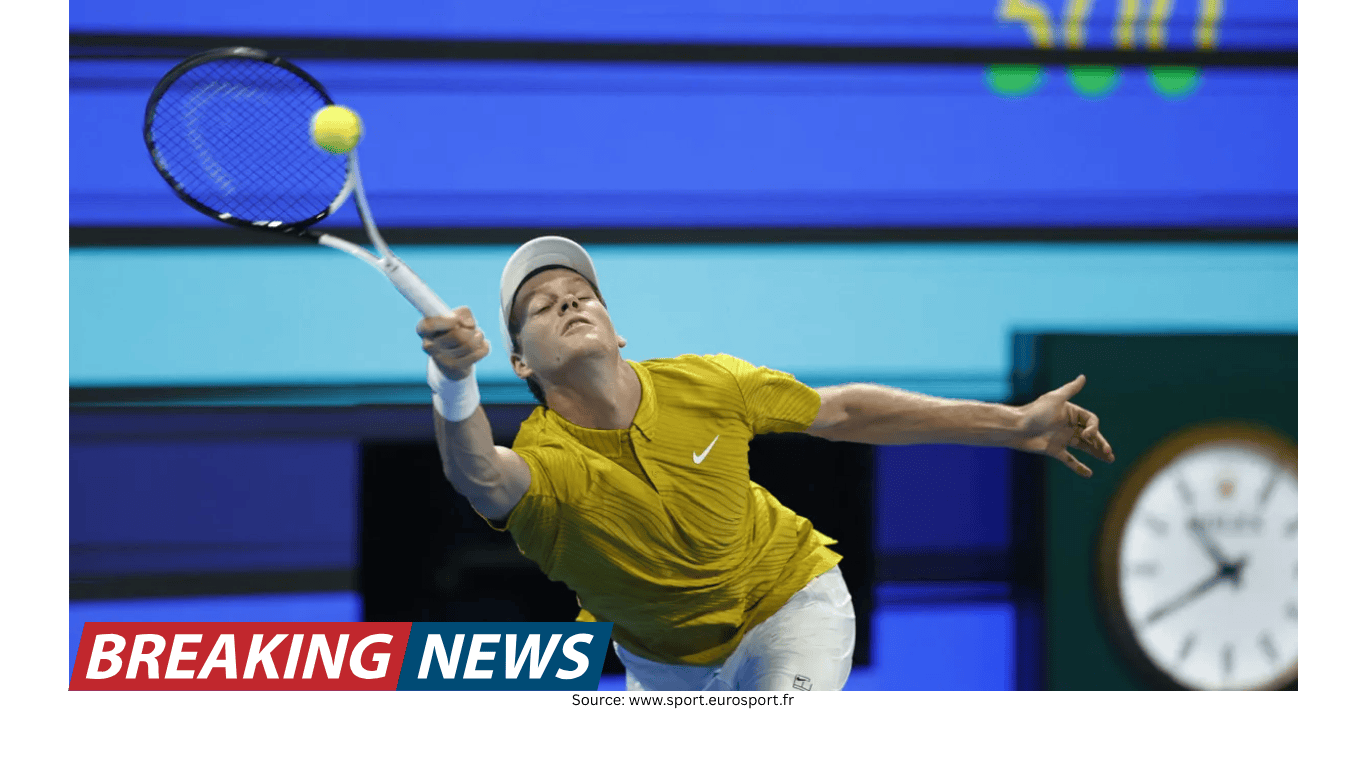
Doha draw reshaped as Sinner falls and Mensik takes a major step
The ATP 500 tournament in Doha, Qatar, will not deliver the final many had expected. Jannik Sinner and Carlos Alcaraz, widely seen as the most likely finalists, have been separated by an unexpected result in the quarter-finals. Sinner, the world No. 2, was eliminated by Czech teenager Jakub Mensik, who won 7-6, 2-6, 6-3 in a match that lasted a little more than two hours.
The upset alters the tournament’s storyline and opens a new path for Mensik, currently ranked No. 16, to chase what would be one of the biggest finals appearances of his young career. For Sinner, it is an early exit at a moment when he was returning to competition and looking to build momentum for the next phase of the season.
A tight opening set, then a swing in momentum
The match between Sinner and Mensik was defined by shifts that came quickly and decisively. The first set moved game by game, with neither player able to secure a break of serve. That pattern held all the way to 6-6, underlining how evenly matched the contest was in its early stages and how difficult it was for either returner to gain control.
In the tiebreak, Mensik proved sharper. He took it 7-3, giving himself the first-set lead and immediate belief that the upset was possible. It was a statement not only on the scoreboard but also in the way he handled the biggest moments of the set, when the margins were at their smallest.
Sinner responds in the second set
Sinner’s reaction was immediate, though it did not begin without danger. Early in the second set he faced the risk of being broken, a scenario that could have pushed the match further in Mensik’s direction. Instead, Sinner raised his level, and the match turned.
As the Italian increased his intensity, Mensik’s level dipped. Sinner took advantage by breaking serve twice in succession and closing the set 6-2. The change was stark: from a set with no breaks at all to one in which Sinner imposed himself on return and controlled the key games.
The decisive third set: Mensik strikes first and holds on
The third set delivered the most unexpected development. Mensik secured a break immediately, seizing the initiative at the start of the decider. From there, he defended the advantage deep into the set, holding his nerve as Sinner tried to pull the match back.
The defining moment came late. Mensik protected his lead until the ninth game, when he broke Sinner’s serve again. That second break sealed the 6-3 set and completed the three-set victory. It was described as Mensik’s most prestigious win, and the manner of it—breaking early, holding firm, then breaking again to finish—showed clarity of plan and composure under pressure.
What Mensik brought: serve power and accuracy in rallies
Sinner encountered an opponent who offered little in the way of easy openings. Mensik was portrayed as a high-quality adversary, powerful on serve and precise in exchanges. Those characteristics were particularly important in a match where the first set went without a break and where the third set hinged on a narrow advantage protected through disciplined service games.
Mensik’s current ranking of No. 16 already places him among the leading names on tour, and he was framed as a talent expected to grow significantly. The Doha quarter-final, then, was not merely a one-off surprise but a result consistent with a player moving quickly into the sport’s upper tier.
Sinner’s return to action and the context around this loss
The Doha tournament marked an important moment in Sinner’s schedule following his semifinal defeat in Melbourne to Novak Djokovic. He was expected back on court to face a stretch of the season that, the previous year, he was unable to play due to a suspension agreed with WADA in the Clostebol case.
In that context, the quarter-final loss represents a disappointing start to this phase of his season. At the same time, the calendar offers immediate opportunities to respond. The next major targets mentioned are the Masters 1000 events in the United States at Indian Wells and Miami, where Sinner will have the chance to rebuild rhythm and results.
Scheduling delays as Alcaraz and Khachanov go long
The quarter-final day also included a scheduling complication. Sinner and Mensik were due to play at 7 p.m. Italian time, but they had to wait significantly because the match before them ran longer than expected. That delay was caused by the contest between Alcaraz and Russia’s Karen Khachanov, which extended into a lengthy battle.
While delays are a routine part of tournament life, they can still affect preparation and rhythm. In Doha, the late start became part of the backdrop for a match that ultimately produced the tournament’s biggest surprise of the round.
Alcaraz survives in three sets and sets up a semifinal with Rublev
Alcaraz, the world No. 1, had to work hard to keep his own campaign alive. He needed three sets to overcome Khachanov, winning 6-7, 6-4, 6-3 after two and a half hours on court. The match required a comeback, with Alcaraz dropping the first set before turning the contest around.
Khachanov was unable to match the feat Mensik achieved against Sinner, but he pushed Alcaraz into a long, demanding encounter. The result keeps Alcaraz on course for the title, though the route remains challenging.
To reach the final, Alcaraz will face another Russian: Andrey Rublev, the defending champion in Doha. Rublev, currently ranked No. 18, advanced by defeating Stefanos Tsitsipas 6-3, 7-6. With Rublev carrying the status of reigning champion and Alcaraz coming off a physically and mentally taxing match, their semifinal sets up as a significant test of form and endurance.
Mensik to meet Fils for a place in the final
Mensik’s reward for eliminating Sinner is a semifinal against France’s Arthur Fils, ranked No. 40. Fils returned to competition two weeks ago after a six-month injury layoff and has quickly found his footing in Doha.
In the quarter-finals, Fils beat Czech player Jiri Lehecka, ranked No. 22, in straight sets, 6-3, 6-3. The result sets up a semifinal between Mensik and Fils in which both players arrive with strong recent performances: Mensik with the biggest win of his career, and Fils with a convincing victory as he continues his return from injury.
Doubles: Bolelli and Vavassori stopped in the semifinals again
In the doubles tournament, the Italian pair Simone Bolelli and Andrea Vavassori saw their run end in the semifinals. They were beaten in two sets, 7-5, 6-4, by the team of Finland’s Harri Heliovaara and Britain’s Henry Patten.
The defeat followed a familiar pattern. Heliovaara and Patten were described as the only team capable of beating the Italians twice, and Doha made it three times in the same stage of a tournament. The same opponents had already defeated Bolelli and Vavassori in January in Adelaide, and earlier at the Finals in Turin—also in the semifinals. In Qatar, the script repeated, sending Heliovaara and Patten into the final once again at the expense of the Italian duo.
Key results from the day
- Jakub Mensik def. Jannik Sinner: 7-6, 2-6, 6-3 (quarter-final)
- Carlos Alcaraz def. Karen Khachanov: 6-7, 6-4, 6-3 (quarter-final)
- Andrey Rublev def. Stefanos Tsitsipas: 6-3, 7-6 (quarter-final)
- Arthur Fils def. Jiri Lehecka: 6-3, 6-3 (quarter-final)
- Heliovaara/Patten def. Bolelli/Vavassori: 7-5, 6-4 (doubles semifinal)
What the semifinals now look like
The tournament now heads into its final weekend with two semifinals that reflect both expectation and surprise. Alcaraz remains in contention, but the anticipated final against Sinner is no longer possible after Mensik’s breakthrough.
Mensik will face Fils for a place in the final, a matchup shaped by two players taking advantage of their opportunities in Doha: Mensik by eliminating the world No. 2, and Fils by advancing strongly after returning from a lengthy injury break.
On the other side of the draw, Alcaraz will meet Rublev, the defending champion. Rublev’s straight-sets win over Tsitsipas, including a tight second-set tiebreak, suggests he is settling into the conditions again, while Alcaraz’s comeback against Khachanov demonstrated resilience over a long match.
Looking ahead for Sinner
For Sinner, the immediate story is the disappointment of a quarter-final exit in a tournament where a deep run had seemed plausible. Yet the broader season offers little time to dwell. With Indian Wells and Miami on the horizon, he has clear opportunities to respond and to build match sharpness after returning to this part of the calendar.
Doha, meanwhile, moves forward with a renewed sense of uncertainty—precisely the kind of shift that makes a week on tour unpredictable. A projected final has been removed from the equation, a young contender has claimed a landmark win, and the remaining contenders must now navigate a path shaped as much by form on the day as by ranking and reputation.