
Conference Championship Injury Watch: Seahawks Lose Zach Charbonnet, Broncos Open Practice Window for Dobbins
As the postseason narrows, every injury update grows louder
Only four teams remain in contention for the Lombardi Trophy, but the NFL news cycle doesn’t slow down when the bracket shrinks. If anything, it accelerates. By the time the conference championship games arrive, the margin for error is razor-thin, and the smallest personnel change can influence game plans, play-calling tendencies, and even how a coaching staff manages risk.
That’s why injury news becomes more consequential as the postseason progresses. The questions are straightforward, but the answers can reshape an entire week of preparation: Who’s hurt? Who’s practicing? Who’s starting? And, perhaps most importantly, who can still be effective even if they’re active but not at full strength?
Heading into the conference championship games, two running back situations stand out. In Seattle, the Seahawks will be forced to move forward without Zach Charbonnet for the remainder of the postseason. In Denver, the Broncos may be inching toward the return of a key contributor, with the team opening up the practice window for running back Dobbins.
Below is a closer look at what has been reported, what it means for each team’s immediate approach, and how these developments intersect with the matchups that will decide who advances.
Seattle’s backfield shifts: Zach Charbonnet out for the season
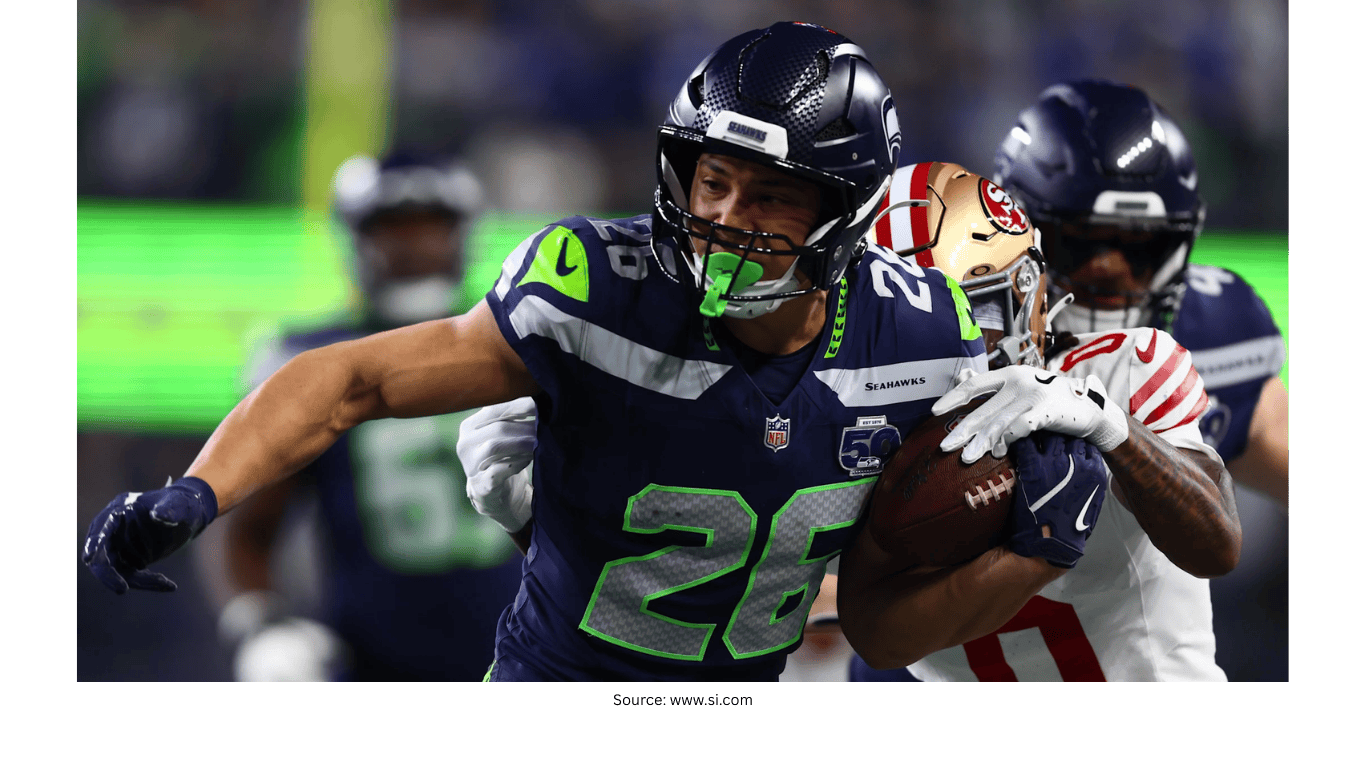
Seattle will have to rely on Kenneth Walker at running back for the rest of the postseason. Head coach Mike Macdonald said on Jan. 19 that Charbonnet will undergo season-ending knee surgery. The injury occurred in the Seahawks’ divisional round win over the San Francisco 49ers, and ESPN later reported that Charbonnet tore his ACL.
The timing is difficult for any team, but it is especially impactful in January, when depth can be tested quickly and the ability to rotate backs is often tied to offensive identity. In Seattle’s case, Charbonnet wasn’t simply a complementary piece. He was a central part of the scoring profile in the regular season.
Charbonnet led the Seahawks in rushing touchdowns during the regular season. His 12 rushing touchdowns were tied for the second-most in the NFL. He also produced 730 rushing yards while averaging four yards per carry.
Those numbers illustrate why his absence matters beyond a single position group. Touchdowns are the hardest commodity to replace, and a back who consistently finishes drives can influence how a team approaches the red zone. With Charbonnet no longer available, Seattle’s offense will have to adjust its distribution of carries and its short-yardage and goal-line approach as it prepares for the NFC Championship Game.
Kenneth Walker’s divisional-round performance sets the tone
The immediate response to Charbonnet’s injury came in the divisional round, and it was emphatic. Walker was able to pick up the slack in Charbonnet’s absence, and then some. He rushed for 116 yards on 6.1 yards per carry and scored three touchdowns.
That output matters for two reasons. First, it demonstrated that Seattle can still generate explosive efficiency on the ground even when losing a primary touchdown producer. Second, it offered a glimpse of how the Seahawks might structure their offense when the running back workload becomes more concentrated.
In the postseason, teams often prefer to lean on what is most stable. A strong rushing performance can reduce the number of high-variance plays an offense must rely on, and it can help control game flow. Walker’s divisional-round production suggests Seattle has a clear path to maintaining a run-first balance if it chooses to do so, even without Charbonnet.
Still, the loss of a player who led the team in rushing touchdowns is not something that can be waved away. Seattle’s challenge is to preserve the elements Charbonnet provided—particularly finishing ability—through other means, whether that comes via Walker’s expanded role or adjustments in play design and situational calls.
NFC Championship setting: Seahawks host Rams
Seattle’s next test is immediate and high-stakes. The Seahawks host the Los Angeles Rams in the NFC Championship Game on Sunday. The game is scheduled for 6:30 p.m. ET on FOX and the FOX Sports app.
From a preparation standpoint, the injury news clarifies one of the biggest questions Seattle would have faced during the week: how to divide carries and how to build contingency plans around the running back rotation. With Charbonnet out for the season, the Seahawks’ approach becomes more straightforward in terms of personnel, even if it becomes more demanding in terms of execution.
The postseason can turn on a handful of snaps—one missed tackle, one short-yardage stop, one red-zone series that ends in three points instead of seven. Charbonnet’s regular-season touchdown production underscored his value in those moments. Now, Seattle will look to replicate that impact with the backs it has available, led by Walker after his divisional-round surge.
Denver’s update: practice window opens for Dobbins
While Seattle is absorbing a season-ending loss, Denver is monitoring a potential reinforcement. The Broncos are opening up the practice window for running back Dobbins, ESPN reported on Jan. 19.
Earlier in the season, it was initially thought that Dobbins suffered a foot injury that would sideline him for the season in Week 10. The decision to open his practice window is, therefore, a notable development at this stage of the calendar, particularly with the AFC Championship Game looming.
For teams still playing in late January, any additional option—especially at a physically demanding position like running back—can influence game planning. Even the possibility of a player returning can force an opponent to account for different personnel packages and tendencies.
What Dobbins produced before the injury
Dobbins’ pre-injury production helps explain why Denver would welcome him back into the mix. In 10 games prior to the injury, he rushed for 772 yards on five yards per carry and scored four touchdowns.
Those figures suggest a back who was delivering both efficiency and volume. Five yards per carry is a strong benchmark, and pairing that with 772 yards in 10 games indicates consistent usage. The touchdown total, while more modest than Charbonnet’s, still reflects a meaningful contribution to Denver’s scoring output.
Of course, opening a practice window is not the same as confirming a return to game action or guaranteeing a certain workload. But at minimum, it introduces a new variable for Denver as the Broncos prepare for a matchup that is expected to be defined by fine margins and disciplined defense.
AFC Championship context: a tough Patriots run defense
Denver’s opponent presents a clear challenge on the ground. The Broncos are going up against a New England Patriots defense that has allowed just 3.1 yards per carry this postseason.
That number frames the task ahead. When a defense is limiting rushing efficiency to that degree, offenses often have to work harder for every yard, and they may need to be more precise with blocking assignments and run selection. It can also place a premium on players who can create positive plays even when lanes are narrow.
In that context, the possibility of Dobbins returning—after it was initially thought his Week 10 foot injury would sideline him for the season—becomes particularly relevant. Whether he ultimately plays or not, Denver’s backfield planning now includes an additional consideration that did not appear to be available earlier.
Why running back health is magnified in late January
In the regular season, teams can sometimes absorb injuries by spreading touches across multiple players, leaning on matchups, or simply surviving a week with a different approach. In the postseason, there is no longer a long runway to adjust. A single elimination game can end a season, and the conference championship round is where the pressure peaks just before the Super Bowl.
That’s why the questions—who’s hurt, who’s practicing, who’s starting—become more than routine check-ins. They become the foundation for the week’s strategy. A backfield injury can change how a team handles early downs, how it approaches the red zone, and how it manages the clock late in halves.
Seattle’s situation is a clear example. Charbonnet’s 12 rushing touchdowns, tied for the second-most in the NFL, were a defining feature of the Seahawks’ regular-season identity near the goal line. Losing that production forces a recalibration, even if Walker’s divisional-round performance showed that Seattle can still produce at a high level on the ground.
Denver’s situation is the inverse: a player once thought lost for the season may now be trending toward availability. Dobbins’ 772 rushing yards and five yards per carry in 10 games provide a snapshot of what he can add if he is able to contribute. And against a Patriots defense allowing 3.1 yards per carry this postseason, every incremental advantage matters.
Key takeaways ahead of the conference championship games
Seattle will be without Zach Charbonnet for the rest of the postseason. He will undergo season-ending knee surgery, according to head coach Mike Macdonald on Jan. 19, after suffering an ACL tear in the divisional round win over the 49ers.
Charbonnet’s regular-season production was significant. He led the Seahawks in rushing touchdowns with 12, tied for the second-most in the NFL, and added 730 rushing yards on four yards per carry.
Kenneth Walker delivered a major divisional-round response. In Charbonnet’s absence, Walker rushed for 116 yards on 6.1 yards per carry and scored three touchdowns.
Seattle hosts the Rams in the NFC Championship Game. The game is set for Sunday at 6:30 p.m. ET on FOX and the FOX Sports app.
Denver opened the practice window for Dobbins. ESPN reported the move on Jan. 19 after it was initially thought his Week 10 foot injury would sideline him for the season.
Dobbins was productive prior to the injury. He rushed for 772 yards on five yards per carry and four touchdowns in 10 games.
Denver faces a Patriots defense that has been strong against the run. New England has allowed just 3.1 yards per carry this postseason.
What to watch as final decisions approach
As kickoff nears, the focus will remain on availability and role definition. For Seattle, the question is less about who will carry the load and more about how the offense replaces Charbonnet’s specific contributions—especially his regular-season touchdown production—within a condensed playoff rotation.
For Denver, the conversation centers on timing and readiness. Opening the practice window for Dobbins introduces the possibility of a return after a foot injury that was initially believed to be season-ending. His earlier efficiency and yardage totals show why that matters, but the opponent—New England, allowing only 3.1 yards per carry this postseason—ensures that any rushing success will be earned.
With only four teams left, the stakes are obvious. The injury report, often treated as background noise in September and October, becomes a headline in January. And this week, two running back storylines—one loss, one potential return—are shaping how two contenders prepare for the final step before the Super Bowl.